Beyond the Clinic Walls: Rethinking HIV Prevention Through Rural Drug Shops

Beyond the Clinic Walls: Rethinking HIV Prevention Through Rural Drug Shops

Written by: Nomujuni Natukwatsa, Florence Mwangwa, and Collins Ampaire | Team Gamba Link, Uganda

What if the first conversation about HIV prevent ion didn’t happen in a hospital but in a small drug shop down the road?

In many rural communities across Uganda, young people rarely walk into hospitals to ask about sexual health products. Instead, they rely on community drug shops and trusted community care providers as their first point of contact for sexual health needs which may include HIV prevention services. Yet these accessible and trusted spaces are often excluded from formal HIV prevention strategies. 

Our inspiration

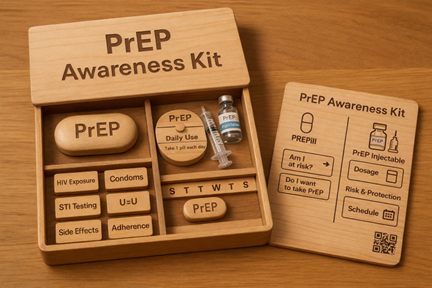
The INSPIRE Designathon provided a platform for us to develop the Gamba Link project. Gamba means to speak, tell or address in Bantu languages in Uganda. Our project aims to onboard community medicine providers by introducing them to structured HIV prevention information in order to support them to speak to young people about accessing biomedical HIV prevention products. The Gamba Link project developed the PREP-Go toolkit, a tool box of familiar communication tools to support community medicine providers like drug shop attendants to initiate youth-friendly, non-judgmental conversations about using HIV prevention products and link adolescents and young adults (AYAs) to peer navigators for PrEP services at formal health facilities. 

The challenge that birthed Gamba Link

Pre-exposure prophylaxis (PrEP) and post-exposure prophylaxis (PEP) are proven, effective HIV prevention tools. However, uptake among adolescents and young adults (15–24 years), particularly in rural areas, remains low. Young adolescents who are just beginning their sexual health journeys (15-20 years) are particularly vulnerable. Structural barriers such as low knowledge, fear of discussing sexual related matter with authority figures, stigma, limited youth-friendly services, and weak referral systems continue to stand in the way. 

Through community engagement and prior evidence, we learned an important insight — many rural youth do go and seek sexual health products from trusted community drug shops. These spaces are informal, familiar, and discreet. Despite this, drug shop attendants are rarely equipped with the confidence, language, or tools to discuss sensitive topics like HIV prevention. 

This gap presented both a challenge and an opportunity.


Turning community drug shops into gateways for HIV prevention access

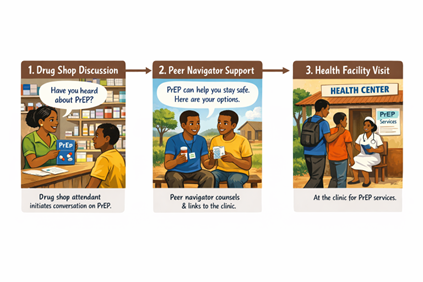
We designed PREP-Go, a structured communication toolkit that supports drug shop attendants to confidently and non-judgmentally initiate conversations about accessing HIV prevention with the help of age appropriate support through peer navigators, who provide PrEP in formal health services. 

Because community drug shops are not yet authorized to prescribe PrEP, we believe PREP-Go toolkit enables them to participate in HIV prevention actively by:

  • Arousing curiosity about PrEP products 
  • Sharing accurate, stigma-free PrEP information 
  • Providing a clear referral pathway to supportive PrEP providers 

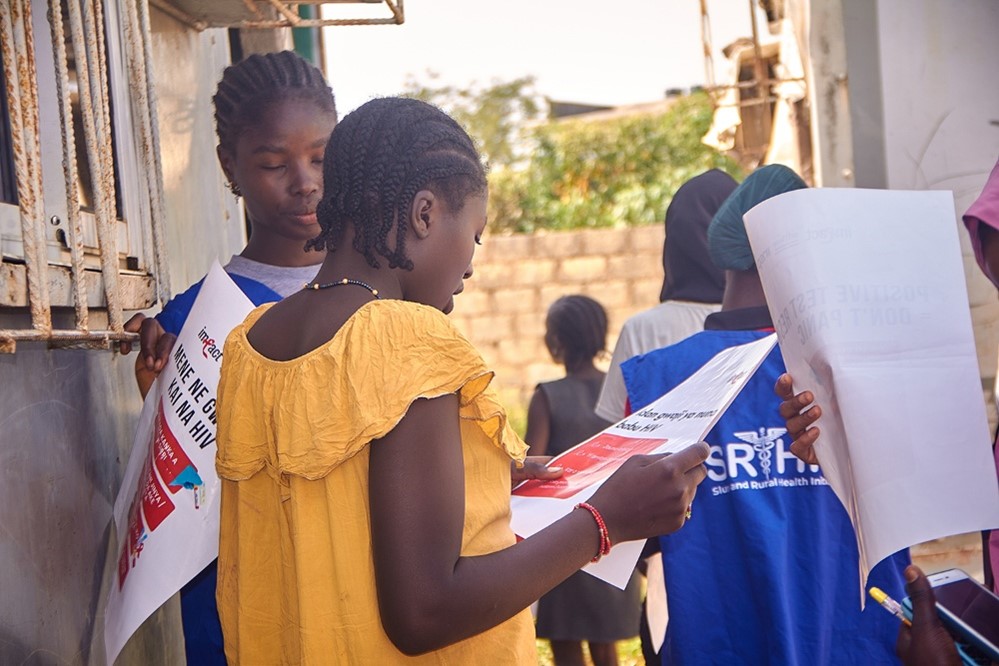
The toolkit includes a simple poster with visual information on who needs PrEP and how to access it, flash cards with PrEP choices, and a short, animated video to watch privately or share with acquaintances. All participating shops will have the name and phone contact of the nearest PrEP peer navigator. 

Designing with, not for, the community

We engaged multiple stakeholders from the start: adolescents and young adults, drug shop attendants, and peer navigators. Their lived experiences helped shape every design decision. 

Drug shop attendants told us they often wanted to help young people but feared saying the wrong things which would scare away their customers. Youth shared that they valued confidentiality, discretion, and respectful communication more than medical expertise. Peer navigators emphasized the importance of building trust in the communities. These insights informed a key design principle: keep it simple, visual, supportive, and scalable.

Testing the solution in the real world

The PREP-Go tool kit is being tested through a qualitative pilot study in four rural community pharmacies and drug shops in Lyantonde District of southwestern Uganda. The study uses a pre- and post-intervention design to assess feasibility, acceptability, fidelity, and sustainability. 

To understand how the toolkit works in practice, we are collecting data from: 

  • Drug shop attendants who are using the toolkit 
  • Peer navigators supporting referrals 
  • Trained youth mystery clients observing real interactions

By combining focus group discussions, in-depth interviews, and mystery client visit reports, we aim to capture honest feedback on how youth experience PrEP conversations in these informal health settings. 

Why this matters for youth

Young people in rural communities face a disproportionate risk of HIV due to social vulnerability, early sexual debut, limited access to services, and stigma. By bringing youth acceptable PrEP conversations closer to where youth already are, the PREP-Go toolkit helps normalize HIV prevention conversations even in commercial spaces and reduces missed opportunities for seeking these services. 

Equally important, the project builds youth leadership. Peer navigators and mystery clients gain skills in advocacy, communication, and community engagement — strengthening local capacity beyond the project lifespan. 

Looking ahead

We envision a world where talking about HIV prevention is as normal, stigma-free, and accessible as buying pain relief medicine at a drug shop. 

Through the PREP-Go toolkit, we test if well-designed communication tools can unlock big changes in how communities approach HIV prevention. With continued collaboration, learning, and refinement, this model has the potential to transform rural HIV prevention across Uganda and similar settings. 

Innovation does not always require new buildings or complex technologies. Sometimes, it starts with the right tools sparking a conversation among willing people. 

Under the Stairs: What One Conversation Taught Us About Invisible Barriers to HIV Care

Under the Stairs: What One Conversation Taught Us About Invisible Barriers to HIV Care

Guest Authors: Monica Gbuchie, Ah’mad Akande, Fana-Granville Loizy | Team EqualCare, Nigeria

We met Ada during a community outreach program. She was seated underneath the stairs of the community townhall, keeping to herself, her crutches leaning against the wall. From afar, she looked like someone simply waiting to be attended to, but when we approached her, we learned she had been there for quite some time. She had come alone because her mother could not accompany her, and even though the journey was difficult, she refused to miss another opportunity to be seen. In that moment, she reminded us how much strength it takes to navigate the healthcare system when you are living with both a disability and HIV. Her presence there was an act of quiet courage.

During our conversation with her, she told us she had missed several visits in the past, not because she wanted to, but because transport was unreliable and she relied heavily on others to accompany her. Each missed appointment left her feeling like she was losing control of her own care. She wished she had a way to stay connected to her healthcare team even when she could not make it to the clinic.

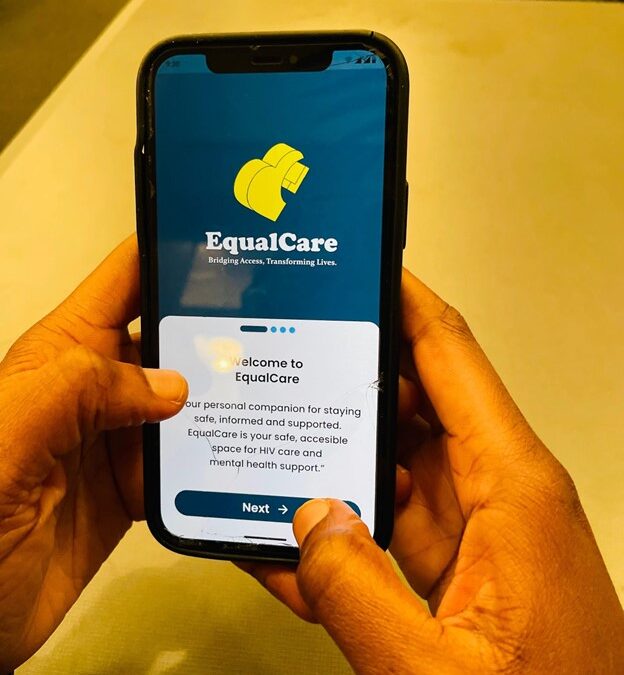
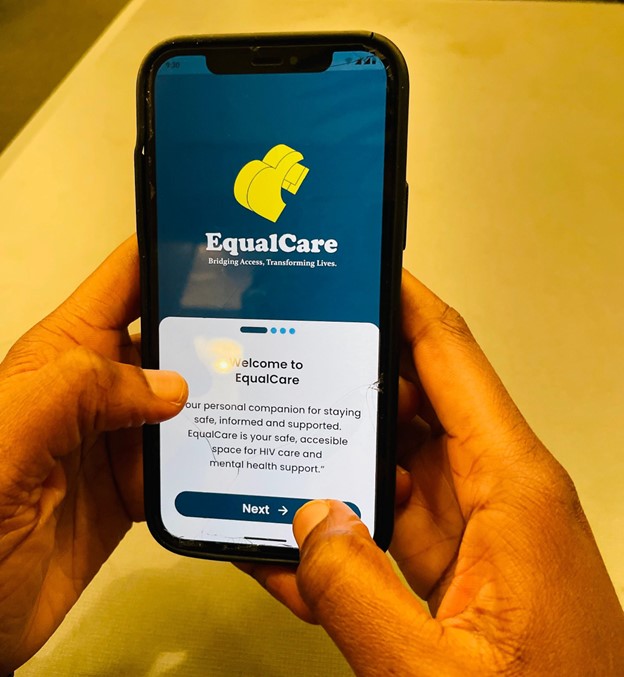
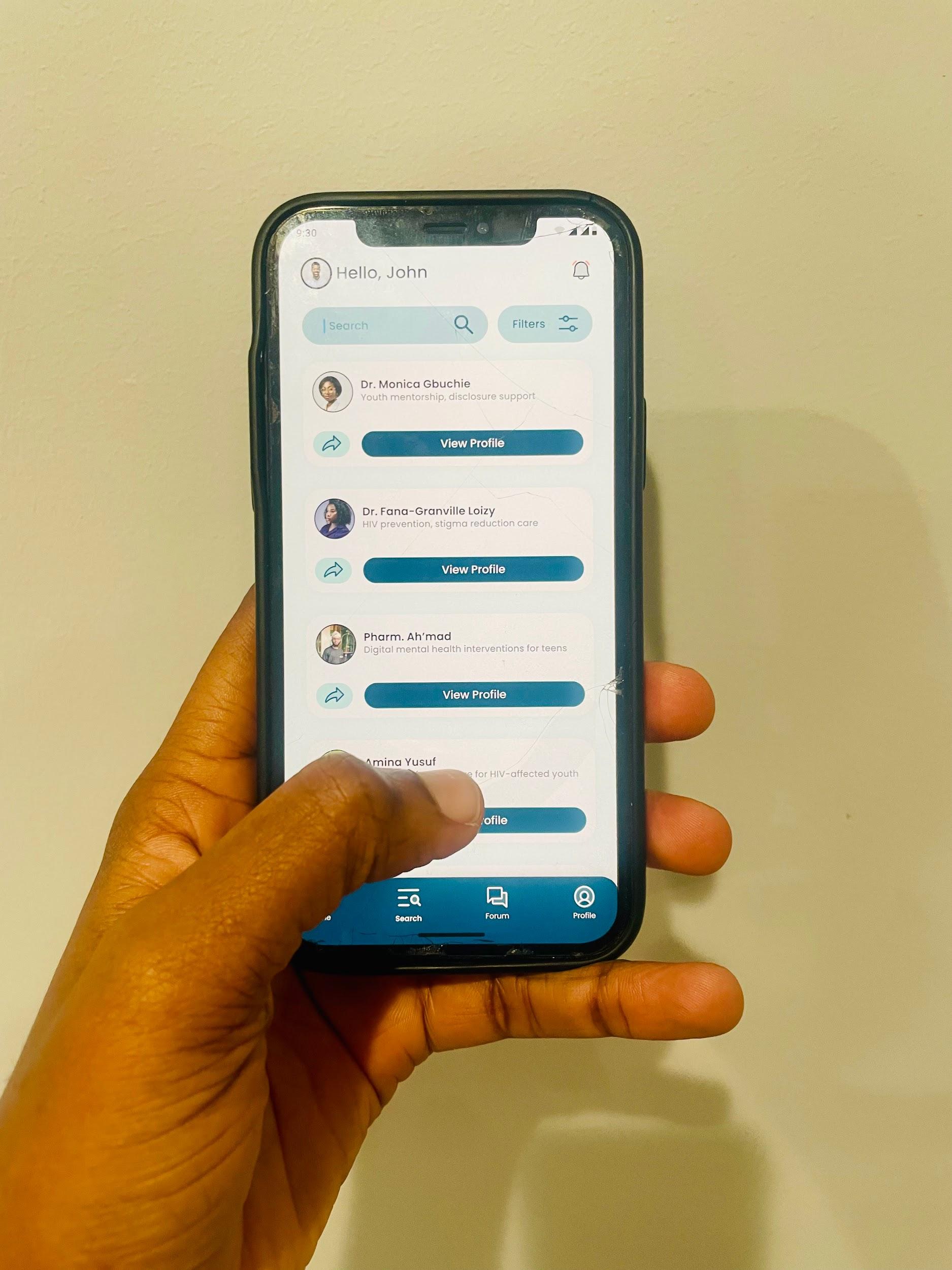
This made us even more resolute in our commitment to develop EqualCare, a digital tool designed to support young people living with HIV and disabilities. EqualCare provides treatment reminders, easy access to trustworthy health information, and a peer navigation system. As we shared the idea with different people in our circle, many were genuinely excited about its potential. They said that having someone to talk to on days when they could not travel to health facilities would make young people feel less alone. We also received feedback that the app’s supportive features could be life changing and might even be expanded in the future to serve other persons with disabilities living with chronic conditions beyond HIV. Our conversation with Ada made these invisible barriers even clearer, and they continue to guide the work we do.

Challenges So Far and Lessons Learnt

Developing EqualCare has been a real learning experience for our team. We quickly discovered that true accessibility is not achieved through a single feature. It requires thoughtful design, simple navigation, and content that works for young people with different physical abilities and digital realities. One of our biggest hurdles has been finding experts with the right technical skills to build an app that can genuinely support users with diverse disabilities. Beyond technology, securing buy-in from stakeholders has been difficult, mainly because many clinics do not keep records of young people living with both HIV and disabilities. This lack of data makes it harder to identify and reach the very group the app is meant to serve. Early survey responses highlighted this gap and reminded us how invisible this population can be within health systems.

Another is finding the community itself and earning trust has required patience. Many young people have had mixed experiences with digital tools or health programs, so building confidence has meant showing up consistently and listening closely. These interactions have shaped our understanding more than any formal assessment could.

Along the way, we have learnt that our idea, although ambitious, is needed and we remain committed to getting it right. But it is also clear that we cannot do this alone. Stronger community engagement, supportive stakeholders, and sustainable funding will be essential to move EqualCare forward.

Looking Ahead

Meeting Ada showed us why this work must continue. Collecting feedback will not always be easy. Network challenges, shared phones, and long distances all shape how young people interact with digital tools. But stories like hers show us why we have to keep going. Each experience helps us refine EqualCare into something that reflects real needs rather than assumptions.

Our goal is simple. We want EqualCare to meet young people where they are, instead of expecting them to navigate systems that were never built with their circumstances in mind. Young people living with both disabilities and HIV are often unseen in healthcare settings, and their challenges rarely influence program decisions. They deserve better.

From sitting under the stairs at an outreach event to managing care at home, young people deserve support that fits into their lives. EqualCare is our commitment to designing a tool that finally sees them.

Youth Deserve Better—How We’re Changing HIV Testing Norms in Zambia

Youth Deserve Better—How We’re Changing HIV Testing Norms in Zambia

Guest Authors: Precious Kaniki and Joshua Kasuba | Project YouthLink, Zambia

This blog post is the third in a series written by teams participating in the 2025 INSPIRE Designathon. Chosen from hundreds of submissions, these teams participated in a dynamic three-day sprint to sharpen their ideas and pitch innovative solutions to a panel of expert judges. Each team received funding to implement, adapt, and scale-up HIV interventions for adolescents and young adults over the coming year.

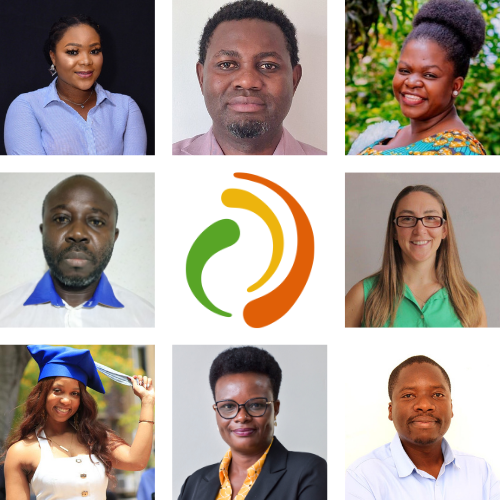
Headshots of the four members of Project YouthLinkProject YouthLink was born from a simple yet powerful question:

What if young people could access HIV testing on their own terms, in their own spaces, with their peers by their side?

As researchers and advocates in Zambia, we have witnessed too many young people arriving at health facilities only after being sick for months—sometimes even years—without ever having taken an HIV test. Many delayed testing out of fear of stigma, because clinics felt unwelcoming, or because the nearest facility was too far away. It was heartbreaking to see young people suffer needlessly from a manageable health condition they didn’t know they had.

We knew something had to change. We wanted to re-imagine what HIV testing could look like for young people in Zambia—accessible, stigma-free, and centered on their realities.

Our Approach: Bringing HIV Testing Closer to Youth

A small group of young people standing outside, talking

Project YouthLink doing community outreach

Project YouthLink is a youth-led, community-centered initiative designed to bring HIV testing closer to young people through mobile outreach, peer navigation, and digital tools.

  • Mobile diagnostic outreach brings testing to markets, schools, and even remote places 
  • Peer navigation ensures every young person who tests knows they are not alone—whether their result is positive or negative
  • Digital linkage tools help track referrals, send reminders, and support follow-ups discreetly and effectively

In essence, YouthLink is a bridge—between community and clinic, between fear and support, between silence and action.

From Idea to Impact

When we first shared this idea at the INSPIRE Designathon, we had the passion but not the perfect words. We were advocates and not presenters. But through mentorship and participatory learning sessions, we refined our design, learned to communicate our vision more clearly, and grew confident in presenting our work to the community

One of our biggest realizations was that diagnostics aren’t just medical—they’re social.

A test is not just a result. It’s a moment of truth that can either isolate or empower. It’s a doorway to dignity, care, and hope.

Youth are not just the future of the HIV response—they are the present. And when we truly listen to them, solutions stop being about them and start being with them. This demands trust, privacy, and peer support — all central to what our project offers.

What We've Accomplished

An HIV test kitSo far, we have trained peer educators and navigators and carried out a pilot outreach. It hasn’t been entirely smooth—particularly in peri-urban communities. Some challenges we’ve faced include persistent stigma and limited knowledge about HIV testing among youth. One young girl told us that she was afraid of testing because most of the health workers are older people who judge young people. That perspective reaffirms exactly why this project matters: testing services must be brought to young people in spaces where they feel safe and understood.

Looking Ahead

We envision a Zambia where no young person discovers their HIV status too late — where diagnosis is early, stigma is reduced, and linkage to care is seamless.

Our next steps include scaling project YouthLink to more districts, strengthening partnerships with stakeholders, and integrating our model within the national HIV response.

We believe young people are not just beneficiaries — they are drivers of change. And with Project YouthLink, we are proving that when youth lead, the future of health equity shines brighter for all.

Breaking the Silence: Youth-Led Fight Against HIV Stigma in Northern Nigeria

Breaking the Silence: Youth-Led Fight Against HIV Stigma in Northern Nigeria

Guest Authors: Favour Christiana Ogbuagu, Abubakar Ismail Zango, Makkiyyah Sulaiman Muhammad, and Abdulmalik Ya’u | Youth Against HIV, Nigeria.

This blog post is the second in a series written by teams participating in the 2025 INSPIRE Designathon. Chosen from hundreds of submissions, these teams participated in a dynamic three-day sprint to sharpen their ideas and pitch innovative solutions to a panel of expert judges. Each team received funding to implement, adapt, and scale-up HIV interventions for adolescents and young adults over the coming year.

 In Northern Nigeria, conversations about HIV among adolescents are often silenced by stigma and shame. Studies show that more than nine out of ten young people in Nigeria hold stigmatizing attitudes toward people living with HIV, a reality that discourages testing, treatment, and open discussion.

This stigma weighs even more heavily on adolescent girls, who face layers of judgment tied to gender norms and patriarchal expectations. Many young people internalize these negative messages, hiding their fears, questions, or even their HIV status. Myths persist from the belief that HIV only affects “immoral” people to the idea that it can be cured with traditional medicine. In addition, reliable HIV information is not always available in Hausa, the most widely spoken language in Northern Nigeria. This gap leaves many adolescents uninformed or misinformed.

Our team— Youth Against HIV (YAGH) — saw these challenges firsthand and knew we needed to respond differently. Through the INSPIRE Designathon, we designed a project to:

  • Train peer champions to lead conversations on HIV
  • Strengthen digital tools to include Hausa-language support
  • Establish school-based HIV awareness clubs that can sustain these conversations over time

Why Youth-Led Approaches Matter

Young people often tune out when adults lecture them about HIV. But when the same message comes from a peer – someone who shares their language, humor, and lived experience, it resonates differently.

That is why we placed young people at the center of this intervention. We are training medical students to serve as HIV peer champions not as lecturers, but as conversation starters. Their mission is to create safe spaces where secondary school students feel comfortable asking questions they might otherwise keep hidden.

The Role of Digital Innovation

Language emerged as a key barrier. Much of the available HIV content is in English, leaving many Hausa-speaking adolescents excluded.

To address this, we are strengthening the Youth Leading HIV Awareness Campaign (YOLHAC) digital platform owned by Bridge Connect Africa Initiative by enabling its AI-powered chatbot to function in Hausa during the project period. This allows adolescents to ask questions anonymously, in Hausa or English, and receive accurate, evidence-based answers.

The classroom sessions will open the door to conversation, while the chatbot ensures those conversations can continue privately, at each student’s own pace. For many, that privacy is what makes it possible to ask sensitive questions without fear.

Implementation in Kano: Our Journey

Our journey to this point has been anything but linear. We initially planned to launch in Katsina State, but prolonged ethical clearance processes stalled the timeline. To keep momentum, we pivoted to Kano, which shares Katsina’s cultural and linguistic context.

In September 2025, we successfully trained a dedicated group of YAGH Champions, ten medical students passionate about changing the HIV narrative among their peers. Over two days, they gained skills in:

  • HIV education and stigma reduction
  • Communication and facilitation
  • Digital literacy
  • Professional conduct and community engagement

The sessions were interactive and practical, equipping the champions to confidently reach secondary school students and lead meaningful discussions. This training marked a key milestone: the transition from planning to action.

Lessons Learned So Far

Even before school implementation begins, the training phase has provided valuable insights:

  • Young people are eager to lead. The energy and commitment of our champions confirmed that youth want to be part of the solution, not just passive recipients.
  • Training builds confidence. Many champions had never facilitated HIV discussions before, but left the training prepared and motivated to step into schools with clarity and purpose.
  • Digital tools need visibility. The YOLHAC webpage and chatbot are powerful resources, but they must be actively promoted so students trust and use them.
  • Partnerships are key. Support from schools, teachers, and community leaders will be crucial to gaining access and sustaining the awareness clubs we aim to establish.


Looking Ahead

With the champions trained, the next step is implementation. Over the coming weeks, YAGH champions will visit five selected secondary schools in Kano to lead peer-to-peer HIV awareness sessions. These sessions will not end in the classroom. Students will be introduced to the YOLHAC platform, allowing them to continue learning privately, in their own language, and at their own pace.

We are also committed to establishing HIV Awareness Clubs in these schools. These clubs will serve as safe spaces where students can keep the conversation alive, supported by peer champions and teachers. Robust monitoring and reporting systems are in place to track progress, capture stories, and guide future scale-up to other states in Northern Nigeria.

Our journey so far has been about building a strong foundation, understanding the barriers, designing solutions, and equipping young people to lead the charge.

Training the YAGH champions is just the beginning. As they enter classrooms, they carry more than information; they carry hope, representation, and a promise: that HIV awareness can be youth-led, stigma-free, and accessible to every adolescent, in every language. Combining peer leadership with digital tools is more than an intervention; it is a pathway to breaking the silence and reshaping the narrative around HIV for young people across Northern Nigeria.

And this is only the beginning.

How we turned our safe space into a digital lifeline

How we turned our safe space into a digital lifeline

Guest Authors: Aness Simon and Tamanda Chingoli, Team HushBuddy, Malawi

This blog post is the first in a series written by teams participating in the 2025 INSPIRE Designathon. Chosen from hundreds of submissions, these teams participated in a dynamic three-day sprint to sharpen their ideas and pitch innovative solutions to a panel of expert judges. Each team received funding to implement, adapt, and scale-up HIV interventions for adolescents and young adults over the coming year.

Hush Buddy is a team of four from Malawi. When we first started working with adolescents and young adults (AYA) living with HIV, we saw the difference a safe space could bring. Through the Comfort Corner—a youth-friendly drop-in centre—we offered support groups, mental health counselling, vocational training and antiretroviral therapy (ART) adherence support. However, we noticed that our target population was not patronizing the Comfort Corner as much as we had hoped. Some were afraid of being seen at the clinic and having their status exposed. Others could not afford to spare time or the cost of travel for in-person sessions. As much as they wanted help, fear and circumstances kept them away.

The birth of Hush Buddy

We wanted to take everything good about Comfort Corner and make it accessible on any phone, whether smart or not. We answered the questions, “What if support didn’t require physically showing up?” and “What if help could meet young people exactly where they are, safely, quietly and privately?”

Hush Buddy is our answer. Hush Buddy is a mobile app based on Unstructured Supplementary Service Data (USSD), meaning it works on any phone and without needing internet or data—something the average Malawian does not have access to. With a few keypad presses, AYA can access mental health check-ins, connect with an accountability buddy, get medication reminders, or find a vocational training referral. Anonymously.

One challenge has been translating the warmth of in-person sessions and the sense of community that the Comfort Corner brings into a digital format. Some users weren’t sure how to use the USSD system or didn’t trust that help could really come from their phones. Others started using it but dropped off after a few tries. We had to simplify the language and make it feel like someone was on the other side. That human touch, even on a keypad, matters. We are learning that privacy is just as powerful as presence. When someone feels safe enough to reach out, that’s when real change starts.

Participating in the INSPIRE Designathon

Coming into the INSPIRE Designathon, we knew what we wanted to do, but we didn’t know how to explain it in a way that made sense beyond our circles. As nurses and program leads, we were used to thinking in care plans, community outreach, and session scheduling, not frameworks and logic models.

At first, we were nervous. The room was full of academics, researchers, and people using language that felt so far from our everyday work. But we listened. Slowly, things started to click. Through the mentorship sessions, we learned how to present our idea clearly and build a real pitch deck. The RE-AIM (Reach, Effectiveness, Adoption, Implementation, Maintenance) framework helped us look at Hush Buddy from all angles.

We also learned how to collect meaningful qualitative data using focus group discussions, and how that data could be used to improve the service, not just for monitoring. Before the Designathon, we saw feedback as something you did at the end. Now, we see it as something that shapes the process from the start.

The participatory learning meetings continue to give us more than technical knowledge. The Designathon has given us a community. Hearing from other teams reminded us that everyone is learning as they go. We saw people trying, failing, reworking and that made space for us to show up honestly, too. It’s easy to feel like you’re behind when you’re still figuring things out, but through these meetings, we realized that showing up with questions is part of what makes this work real.

Piloting the Hush Buddy app

One of our biggest lessons came after we launched the pilot. We realized we had made assumptions. We thought a USSD platform would be easy for anyone to use. It wasn’t. Some users were confused by the menu. Others didn’t know whether pressing “1” would lead to real help or just a message. And a few didn’t return after trying it once.

We didn’t take that lightly. We held a feedback session with some of our youth participants and asked what would make it easier. The responses were honest: “Make it shorter,” “Say it in Chichewa,” “Tell us what to expect first.” We used that feedback to simplify the menu, adjust the tone of our messages, and rework our scripts to explain the steps more clearly. This process reminded us that youth are not just users; they are co-creators.

We want to see Hush Buddy reach youth in rural districts where HIV support is even harder to access and stigma is higher. We’re exploring partnerships with mobile networks like Airtel and TNM so that the USSD code can be zero-rated and truly free to use. Long-term, we hope the Ministry of Health and other national partners will adopt it into Malawi’s broader HIV support system, especially as a digital bridge for AYA transitioning out of Teen Clubs.

The process of building Hush Buddy has helped us grow as a team—from struggling to turn our idea into a pitch, to confidently presenting it to reviewers, to rewriting menus based on real user voices. We have been stretched in the best way. Innovation isn’t always tech-heavy. Sometimes, it’s about quietly creating something that meets people exactly where they are.

For us, Hush Buddy is not just a mobile tool. It’s a promise that support doesn’t have to be loud or public to be powerful. It can be quiet. It can be private. And it can still save lives.

Meet the INSPIRE course 2025 cohort

Meet the INSPIRE course 2025 cohort

INSPIRE has concluded its inaugural Appreciative Inquiry-Based D&I Course! Twenty early and mid-career researchers, implementers, and practitioners from the eight clinical research centers that make up PATC³H-IN celebrated their graduation from the course on 9 May 2025. 

Participants explored the critical processes of adaptation, scalability, and sustainability, all of which are essential to optimizing the HIV prevention and treatment continuum for adolescents and young adults in low-to-middle-income countries. Grounded in the principles of dissemination and implementation (D&I) science and guided by appreciative inquiry, the course curriculum featured lessons on the foundations of D&I science for youth, implementation strategies for youth-centered initiatives, methodological resources for youth-centered D&I, co-creation of D&I course content for youth initiatives, and delivering D&I science for youth. 

The 2025 cohort will continue to receive instruction and mentoring through April 2026. 

This course will expose you to concepts, theories, models, and frameworks that are useful and applicable across disciplines. The knowledge gained from the course will undoubtedly transform your understanding of Appreciative Inquiry-Based D&I.

Lawrencia Mushi

2025 Course Participant

Meet the cohort

Ojore Aghedo, BSc,PGD,MSc

RISE | Nigeria

Ojore Godday Aghedo is a public health professional with over twelve years of experience in research, project monitoring and evaluation, and public health program management. He has special interests in infectious diseases epidemiology and health system strengthening in Nigeria and Sub-Sahara Africa.

Over the past decade, Aghedo’s foundation in health research and data management has been strengthened with experience in the implementation of HIV and tuberculosis programs, as well as surveillance and monitoring of various health initiatives. Most recently, he served as the Research and Data Coordinator at the Centre for Population Health Initiative for the RISE center.

Tajudeen Bamidele, BSc,MSc,PhD

S-ITEST | Nigeria

Tajudeen Bamidele presently works as a chief research fellow at Nigerian Institute of Medical Research (NIMR), where he conceives, designs and conducts health research of national priorities. His focus in basic research has been in exploring the biotechnological potentials of local microorganisms with a view to exploiting them as probiotics and drug (antimicrobial) candidates. He does this with a One Health approach. Bamidele participates in the maternal reproductive and child health, HIV/TB research groups of NIMR and served as a supervisor of youth facilitators in the just-concluded Innovative Tools to Expand Youth Friendly HIV Self-Testing (4 Youth By Youth). Additionally, He is engaged as a senior adjunct lecturer by the Eko University of Medicine and Health Sciences, Lagos, Nigeria to teach Medical students different aspects of infectious diseases/Medical Microbiology.

Julia Brasileiro, BA,MPH,PhD

RISE | USA

Julia Brasileiro is a behavioral health researcher with training in public health and community psychology. Her work integrates behavioral and implementation science methods to develop and implement strengths-based, tailored digital health interventions (DHIs) to promote health. She takes a holistic approach to promoting the health of youth, with a focus on sexual health, relationship health, and mental health. Her career goal is to collaborate with communities to co-create, implement, and evaluate strengths-based DHIs to promote the health of marginalized youth. As a postdoctoral scholar at the Institute on Digital Health and Innovation at Florida State University, she supports type 2 hybrid-effectiveness-implementation study to evaluate the effectiveness and implementation of the HealthMpowerment mobile app in four Sub-Saharan African countries.

Nok Chhun, BA,MSc,MPH,PhD

ZAIMARA | USA

Nok Chhun is currently a postdoctoral research associate with the Center for Dissemination and Implementation Science at the University of Illinois in Chicago. She is a global health professional with 10+ years of experience across academic settings as a scientist and research manager. Prior to starting her PhD program at the University of Washington, she was the project director for an NIH funded research project, High-yield HIV testing, facilitated linkage to care, and prevention for female youth in Kenya (R01AI122797, PIs: Kurth, Inwani, Agot, 8/2015–7/2020) based in Homabay County in western Kenya. Through her work experiences, Chhun witnessed how critical implementation science is for Kenya and became interested in how implementation science approaches could be used to influence adoption and scale-up of effective interventions. Understanding the contextual factors that hinder the delivery of evidence-based interventions can inform targeted strategies to overcome those barriers.

Jeanne Coetzee, MBChB

ATTUNE | South Africa

Jeanne Coetzee is a medical doctor working as a principal and sub-investigator at Wits RHI Shandukani CRS in Johannesburg, South Africa. Her role has allowed her to work on more than 30 clinical trials as an investigator, with a research focus on the treatment and prevention of infectious diseases in maternal, child, and adolescent populations in South Africa, specifically HIV and TB. Coetzee is a dedicated medical professional with a strong pediatrics and public health background and extensive experience in clinical research in infectious diseases. Her enthusiasm for education has led her to become an honorary staff member and lecturer in the Department of Paediatrics at the University of Witwatersrand. Her journey in medicine has shaped her into a compassionate healthcare provider committed to improving patient outcomes.

Mrinmayee Dhar, MD

ATTUNE | South Africa

Mrinmayee Dhar joined the Wits RHI team in October 2020, and adapted well into her role as sub-investigator. She quickly transitioned into the role of Principal Investigator in 2022, including pharmaceutical and IMPAACT network studies, as well as investigator-driven projects. She has worked as principal investigator on pharmaceutical trials, specifically in COVID-19 vaccine studies, including GO-012 (Gritstone) and C4591048 (Pfizer). Dhar is national principal investigator for the planned IMPAACT 2040 network study, focusing on optimizing HIV treatment through long-acting injectable anti-retroviral treatment in pregnant and post-partum women. Additionally, she is co-principal investigator on the Optimizing Maternal Vaccinations in South Africa project, an implementation sciences project focused on maternal immunization in South Africa. Dhar has expertise in clinical care, research and project management.

Sabdat Ekama, BSc, MSc,PhD, FPCPharm

S-ITEST | Nigeria

Sabdat Ozichu Ekama is a research fellow and pharmacist at the Nigerian Institute of Medical Research (NIMR) with over 15 years’ experience in HIV/AIDS clinical management. She has conducted several research projects in HIV/AIDS management and HIV prevention. Her recent research work focused on developing a HIV prevention microbicide for use among women. Ekama Sabdat has been involved in research on gender-based violence among adolescents in schools and the outcome of this research was published (DOI: 10.15761/MCA.1000135). She also has experience in the conduct of clinical trials and is currently the study coordinator of a clinical trial conducted by VERTEX Pharmaceuticals on the safety and efficacy of VX-147 on individual with APOL-1 mediated proteinuric kidney disease at the NIMR site in Nigeria.

Paschal Ezeobi, MSc, MB, BS

S-ITEST | Nigeria

Paschal Ezeobi is a clinician and research fellow working at the Clinical Sciences Department of the Nigerian Institute of Medical Research (NIMR) He is a medical doctor with a background in Public Health and presently engaged in the PhD Program in public health. He has worked in the HIV Programme of NIMR since 2002, when the National HIV Programme came into existence and became the coordinator; PEPFAR supported NIMR HIV Treatment Program in 2013. Currently, he is head of the Hepatitis Clinic of the Institute. He has engaged in activities involving clinical research, patient clinical evaluation, management and the coordination of components of the HIV Programme at the Clinical Sciences Department of the Institute. He is presently the NIMR Study Coordinator for the US National Institutes of Health (NIH) sponsored Predictors of Antiretroviral Immune-reconstitution Bone Loss – the Gut and the Microbiome and the International epidemiology Databases to Evaluate AIDS.

Babuu Joseph, PGD

MWOTAJI | Tanzania

Babuu Joseph is the Acting Research Director at Health for a Prosperous Nation (H-PON), a Tanzanian research NGO and partner in the MWOTAJI project. With over a decade of experience in public health—particularly in HIV & AIDS interventions—he has led donor-funded programs for both local and international organizations. His expertise spans program management, stakeholder engagement, training, and research coordination. At H-PON, he oversees collaborative studies with institutions such as UC Berkeley, UCSF, and Mzumbe University. Notable achievements include leading the MWOTAJI project across three regions and contributing to digital innovations in ART patient management. His earlier roles include Regional Team Lead, Research Assistant, and Communications Manager. He also brings consultancy experience on USAID, PEPFAR, and CUSO International-funded projects in HIV, maternal health, and education.

Enid Kabugho, MBChB,MSc

MU-JHU | Uganda

Enid Kabugho is the clinical research coordinator for the HIP-CY Implementation Science study at MU-JHU, where she oversees the day-to-day activities of the project, ensuring regulatory compliance, participant recruitment, data collection, and coordination of study visits. With over a decade of experience in HIV prevention and treatment research, she has played a key role in studies that have informed public health policy. She has collaborated closely with investigators, sponsors, and regulatory bodies to uphold Good Clinical Practice standards. Her work focuses on adapting and scaling evidence-based interventions to improve HIV prevention and care for adolescents and young adults (AYA) in Uganda. Her passion lies in translating research into sustainable, youth-friendly programs that address the unique needs of AYA in resource-limited settings.

Caroline Kongola, MD

MWOTAJI | Tanzania

Caroline Lister Kongola is an associate project director at Health for a Prosperous Nation, where she provides technical oversight for the MWOTAJI study focused on HIV prevention among adolescent and young women in Tanzania. She oversees operations across five Clinical Research Performance Sites, ensuring protocol compliance, accurate data collection, and smooth study implementation. A trained medical doctor with a Bachelor’s degree from the Catholic University of Allied and Health Sciences, she has extensive clinical experience in HIV care and infectious diseases. Her transition into research and healthcare management reflects a deep commitment to improving healthcare access for underserved populations. Dr. Kongola’s expertise includes HIV prevention, program management, and implementation science, with a passion for creating sustainable, evidence-based health interventions.

Marie-Claude Lavoie, MSc,PhD

RISE | USA

Marie-Claude Lavoie is an assistant professor of epidemiology and public health at the University of Maryland School of Medicine and serves as the Strategic Information and Evaluation Director at the Center for International Health, Education, and Biosecurity. In this role, she leads and supports evaluations of large-scale HIV programs and policies across PEPFAR/CDC-funded projects. Her research focuses on implementation science, including serving as MPI on NIH-funded studies involving long-acting injectable HIV treatment among adolescent girls and HIV care among people who inject drugs in Zambia. A former Robert Wood Johnson Foundation Public Health Law Research Fellow, she has received fellowships from the HIV, Infectious Disease and Global Health Implementation Research Institute and the CFAR HIV Implementation Science program.

Maria Lupogo, MPH

MWOTAJI | Tanzania

Maria Felix Lupogo is a dedicated public health specialist with over four years of experience in donor-funded programs, with a focus on HIV/AIDS, health system strengthening, and monitoring and evaluation. Maria has worked in various roles including data clerk for the USAID-funded SAUTI Project, research assistant at NIMR, health information system officer at Marie Stopes Tanzania, and project officer at Digital Divide Data Tanzania. She currently serves as a research assistant for the Afya III project at Health for a Prosperous Nation, overseeing study quality and staff management. Skilled in data analysis and reporting tools, Maria is known for her leadership, integrity, and dedication to improving public health outcomes for vulnerable communities in Tanzania.

Idda Lyatonga, MSc,PhD

MWOTAJI | Tanzania

Idda Lyatonga Swai is a senior lecturer and dean at Mzumbe University’s School of Public Administration and Management. She is the co-principal investigator of the MWOTAJI project, supporting HIV prevention and implementation science capacity building in Tanzania. Her current work focuses on developing and delivering an Implementation Science certificate program, coordinating research activities across Kagera, Shinyanga, and Geita regions through the Health for a Prosperous Nation. With over 17 years of academic and project leadership experience, she specializes in governance, gender, and public health research. She also co-leads the NISHATI project under the European Commission’s Erasmus+ Programme, partnering with institutions across Africa and Europe. Her current interests include implementation science, health systems strengthening, and building sustainable research capacity in low-resource settings.

Matilda Mlowe, MD

MWOTAJI | Tanzania

Matilda Mlowe is a medical doctor and clinical researcher committed to improving public health through research. Her interest in research began during medical school while investigating pneumonia prevalence in children under five in Arusha, Tanzania. She has since built a career focused on HIV and TB care, serving as an HIV care provider and coordinating pediatric TB/HIV detection at Bukoba Regional Referral Hospital. Currently, she coordinates a randomized controlled trial (R01MH125746) assessing cash incentives to re-engage people living with HIV in care and contributes to the NIH-funded MWOTAJI project (UG1HD113163), which aims to expand HIV prevention access for adolescent girls and young women via community pharmacies. Her research interests include implementation science, health systems strengthening, and vulnerable populations’ access to care. Her work centers on advancing healthcare delivery in resource-limited settings.

Lawrencia Mushi, BSc,MSc,PhD

MWOTAJI | Tanzania

Lawrencia Mushi is a senior lecturer and researcher at Mzumbe University and serves as an implementation science (IS) course developer and instructor with the MWOTAJI project in Tanzania. She leads the design, quality assurance, and accreditation processes of short and long IS training programs. Her current research focuses on monitoring and evaluation of health policies and programs, health system strengthening, and the impact of health supply chains and immunization strategies in low- and middle-income countries. Dr. Mushi also contributes to the MWOTAJI study, which enhances HIV prevention access for adolescent girls and young women. As head of the Quality Assurance Unit at Mzumbe University, she ensures high standards in academic and training programs. Her ongoing work integrates academic expertise with practical implementation research, supporting evidence-based improvements in healthcare delivery across Tanzania. 

Zainab Oyeniyi, BSc,BEd

RISE | Nigeria

Zainab Okikiola Oyeniyi is a public health researcher passionate about healthcare reform and infectious disease prevention, especially in resource-limited settings. Currently, she works as a research assistant at the Center for Population Health Initiatives, contributing to projects on HIV prevention, youth health interventions, and implementation science. Zainab’s expertise includes qualitative research, community-based interventions, and public health advocacy. She actively supports participant recruitment, data collection, and qualitative analysis, and has helped develop youth-focused content for the Health MPowerment app to improve sexual health education. A dedicated health advocate and writer, Zainab uses digital platforms to engage communities on health issues. Her career goal is to advance HIV prevention and treatment through evidence-based interventions and policy advocacy in Nigeria and other resource-constrained areas.


Charne Petinger, BA,MA, BA Honors (Psychology)

ATTUNE| South Africa

Charne Petinger is pursuing her third year of a PhD in Public Health at the University of the Western Cape, South Africa, focusing on improving health outcomes and care engagement for adolescents living with HIV. She has additional training in qualitative research, photovoice methodology, qualitative evidence synthesis, health data analytics, adolescent health, and implementation science. Her experience includes tutoring and lecturing at the undergraduate level, working as a research assistant in adolescent HIV, and managing a digital health intervention project (S-SMART) to enhance self-management skills and health outcomes among adolescents with HIV. Currently, she serves as project manager, administrator, and researcher for the ATTUNE project within the Western Cape CRPS.

Fyness Sakala Jere, BSc

RISE | Malawi

Fyness Sakala Jere is an experienced public health professional and nurse with over a decade of service in Malawi’s health sector. She holds a Bachelor of Science in Public Health, a Nursing & Midwifery Technician Diploma, and is pursuing an MSc in One Health. Since 2016, she has been a district coordinator at the Center for the Development of People under the USAID/PEPFAR-funded PROTECT Project, leading HIV services for key populations like MSM, transgender individuals, and male sex workers. Fyness played a key role in establishing a Drop-in Center to reduce HIV infections and earned the Best District Coordinator award. She also contributes to research and policy advocacy, serving on boards and advisory committees. Skilled in project management and community-driven program design, Fyness is committed to improving healthcare access and outcomes for vulnerable populations.

Tapiwa Tembo, BSc, MSc

VS4A | Malawi

Tapiwa Tembo is co-investigator for the VS4A study, leading study implementation and providing scientific design support, and a doctoral candidate in the Department of Medicine at the University of Cape Town. Since 2016, she has been a scientific investigator at Baylor College of Medicine Children’s Foundation Malawi, where she completed a three-year Implementation Science Fellowship. She specializes in HIV intervention development and evaluation, notably contributing to the VITAL Start project aimed at improving ART adherence among pregnant and breastfeeding women. She led the design and evaluation of training interventions for healthcare workers to enhance HIV case finding in Malawi, authoring several publications. Her work includes piloting a blended learning approach funded by the Malawi HIV Implementation Research Scientist Training program.