
The Unseen Scars: Why Family Rejection Fuels Suicide in Adolescents Living with HIV

The Unseen Scars: Why Family Rejection Fuels Suicide in Adolescents Living with HIV

Written by: Aishat Adedoyin Koledowo, Co-Chair INSPIRE Youth Advisory Board, S-ITEST, Nigeria

Family should be an unshakeable source of love, safety, and understanding for young people. After all, it provides the foundation upon which they build the resilience needed to face the world’s challenges. Yet, for far too many adolescents, home becomes the first place of rejection.

Although these issues don’t often make headlines, abuse and stigmatization within families can drive suicidal thoughts and actions among young people with HIV. While society often points fingers at generic causes like “peer pressure” or “mental weakness,” we rarely discuss the invisible crisis unfolding behind closed doors: the isolation, the relentless verbal attacks, abuse and the constant reminder of being “different” and “useless” delivered by the people meant to protect them.

The Silent Abuse: What Stigma Sounds Like at Home

Stigma from family members is rarely a single, overt act; instead, it’s a slow-acting poison that manifests as emotional neglect, physical distancing, and cruel language, creating a deep wound of exclusion. This rejection is often rooted in fear and misinformation about HIV transmission, leading to subtle but devastating microaggressions that establish physical and emotional distance, such as a family member pulling back and instructing: “Don’t share cups with me. You need your own plate. Don’t use this! Don’t use that!” Stigma often escalates into emotional abuse that harms the adolescent’s self-esteem and future hopes, cutting deepest because it comes from a primary caregiver. It may sound like: “You are a useless child. You will never amount to anything, and this is your punishment,” or the harsh accusation of bringing shame upon the family. An adolescent, still navigating their emotional development and identity, internalizes this consistent rejection as absolute confirmation that “I am unworthy of love.”

The Breaking Point: From Stigma to Suicidal Thought

Adolescents living with HIV already manage complex challenges, including a strict medication schedule, potential body changes, and the ever-present fear of disclosure. When these difficulties are relentlessly compounded by family rejection or abuse including physical violence, harsh punishments, or deliberate social isolation to “protect the family image” their emotional resilience shatters. These experiences are direct fuel for depression, which is the single biggest predictor of suicide. Without a foundation of emotional support, young people internalize the shame until it morphs into profound hopelessness. Their inner dialogue, once focused on coping, becomes riddled with crushing anxiety and self-doubt, leading to desperate questions like, “how will I ever tell my partner about this when my own mother won’t touch me?” and, “will I ever be able to be someone important in life, or am I just a burden?” This progression of shame and withdrawal fuels suicidal ideation and a feeling that “I just want to end it all”. The tragedy is that these young people are not succumbing to the virus; they are tragically succumbing to the condemnation that has replaced the compassion they desperately need.

Stories Behind the Silent Statistics

Behind every statistic detailing youth suicide and HIV, there is a devastating, preventable story. Consider the case of a teenage girl who stopped taking her essential ARV medication simply because her mother would only communicate with her via notes, labeling her “a disgrace.” In this scenario, the fear of confrontation and rejection became a greater threat than the disease itself. There was also a boy who attempted suicide after being severely beaten for simply disclosing his status to a trusted teacher, believing he had ruined his family’s reputation forever. These are not isolated incidents; they represent countless silent battles occurring in homes worldwide where fear, often fueled by profound misinformation, tragically trumps basic human empathy and a child’s fundamental right to safety and acceptance.

A Call for Compassion

When stigma begins at home, the process of healing must also begin there. Families and communities possess the power to save lives by fundamentally changing their response from one of fear to one based on facts, and from one of shame to one of unwavering support. This begins with education, recognizing that HIV is a manageable, chronic condition, and proactively debunking myths, such as the idea that sharing cups transmits the virus. Crucially, it demands unconditional love, as research has confirmed that just one supportive adult can drastically reduce the risk of suicide among vulnerable youth. Promoting open conversations is vital, ensuring adolescents have safe spaces to ask their biggest, scariest questions about their future, relationships, and identity without the fear of judgment. For families struggling to cope, seeking professional help through counseling may help them to process the diagnosis and rebuild trust. Ultimately, governments and NGOs must recognize this link by integrating robust, accessible mental health services directly into adolescent HIV care programs, ensuring the treatment of the mind is prioritized as much as the treatment of the body.

Choose Compassion, Save Lives

Adolescents living with HIV do not need pity; they need understanding, respect, and unconditional love. When families make the courageous choice of compassion over shame, they do far more than just save a relationship they save a life. It is incumbent upon all of us to recognize the silent crisis of family stigmatization and play our part in ending the suicides it tragically fuels. If you know an adolescent living with HIV, be the reason they feel seen and valued—not ashamed and alone. We must collectively speak up against family stigma and start the necessary conversation today.


Youth Deserve Better—How We’re Changing HIV Testing Norms in Zambia

Youth Deserve Better—How We’re Changing HIV Testing Norms in Zambia

Guest Authors: Precious Kaniki and Joshua Kasuba | Project YouthLink, Zambia

This blog post is the third in a series written by teams participating in the 2025 INSPIRE Designathon. Chosen from hundreds of submissions, these teams participated in a dynamic three-day sprint to sharpen their ideas and pitch innovative solutions to a panel of expert judges. Each team received funding to implement, adapt, and scale-up HIV interventions for adolescents and young adults over the coming year.

Headshots of the four members of Project YouthLinkProject YouthLink was born from a simple yet powerful question:

What if young people could access HIV testing on their own terms, in their own spaces, with their peers by their side?

As researchers and advocates in Zambia, we have witnessed too many young people arriving at health facilities only after being sick for months—sometimes even years—without ever having taken an HIV test. Many delayed testing out of fear of stigma, because clinics felt unwelcoming, or because the nearest facility was too far away. It was heartbreaking to see young people suffer needlessly from a manageable health condition they didn’t know they had.

We knew something had to change. We wanted to re-imagine what HIV testing could look like for young people in Zambia—accessible, stigma-free, and centered on their realities.

Our Approach: Bringing HIV Testing Closer to Youth

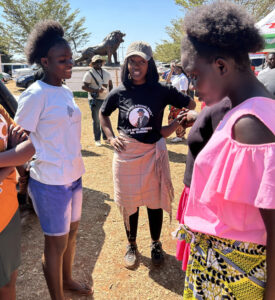
A small group of young people standing outside, talking

Project YouthLink doing community outreach

Project YouthLink is a youth-led, community-centered initiative designed to bring HIV testing closer to young people through mobile outreach, peer navigation, and digital tools.

  • Mobile diagnostic outreach brings testing to markets, schools, and even remote places 
  • Peer navigation ensures every young person who tests knows they are not alone—whether their result is positive or negative
  • Digital linkage tools help track referrals, send reminders, and support follow-ups discreetly and effectively

In essence, YouthLink is a bridge—between community and clinic, between fear and support, between silence and action.

From Idea to Impact

When we first shared this idea at the INSPIRE Designathon, we had the passion but not the perfect words. We were advocates and not presenters. But through mentorship and participatory learning sessions, we refined our design, learned to communicate our vision more clearly, and grew confident in presenting our work to the community

One of our biggest realizations was that diagnostics aren’t just medical—they’re social.

A test is not just a result. It’s a moment of truth that can either isolate or empower. It’s a doorway to dignity, care, and hope.

Youth are not just the future of the HIV response—they are the present. And when we truly listen to them, solutions stop being about them and start being with them. This demands trust, privacy, and peer support — all central to what our project offers.

What We've Accomplished

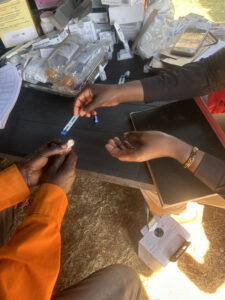
An HIV test kitSo far, we have trained peer educators and navigators and carried out a pilot outreach. It hasn’t been entirely smooth—particularly in peri-urban communities. Some challenges we’ve faced include persistent stigma and limited knowledge about HIV testing among youth. One young girl told us that she was afraid of testing because most of the health workers are older people who judge young people. That perspective reaffirms exactly why this project matters: testing services must be brought to young people in spaces where they feel safe and understood.

Looking Ahead

We envision a Zambia where no young person discovers their HIV status too late — where diagnosis is early, stigma is reduced, and linkage to care is seamless.

Our next steps include scaling project YouthLink to more districts, strengthening partnerships with stakeholders, and integrating our model within the national HIV response.

We believe young people are not just beneficiaries — they are drivers of change. And with Project YouthLink, we are proving that when youth lead, the future of health equity shines brighter for all.

Breaking the Silence: Youth-Led Fight Against HIV Stigma in Northern Nigeria

Breaking the Silence: Youth-Led Fight Against HIV Stigma in Northern Nigeria

Guest Authors: Favour Christiana Ogbuagu, Abubakar Ismail Zango, Makkiyyah Sulaiman Muhammad, and Abdulmalik Ya’u | Youth Against HIV, Nigeria.

This blog post is the second in a series written by teams participating in the 2025 INSPIRE Designathon. Chosen from hundreds of submissions, these teams participated in a dynamic three-day sprint to sharpen their ideas and pitch innovative solutions to a panel of expert judges. Each team received funding to implement, adapt, and scale-up HIV interventions for adolescents and young adults over the coming year.

 In Northern Nigeria, conversations about HIV among adolescents are often silenced by stigma and shame. Studies show that more than nine out of ten young people in Nigeria hold stigmatizing attitudes toward people living with HIV, a reality that discourages testing, treatment, and open discussion.

This stigma weighs even more heavily on adolescent girls, who face layers of judgment tied to gender norms and patriarchal expectations. Many young people internalize these negative messages, hiding their fears, questions, or even their HIV status. Myths persist from the belief that HIV only affects “immoral” people to the idea that it can be cured with traditional medicine. In addition, reliable HIV information is not always available in Hausa, the most widely spoken language in Northern Nigeria. This gap leaves many adolescents uninformed or misinformed.

Our team— Youth Against HIV (YAGH) — saw these challenges firsthand and knew we needed to respond differently. Through the INSPIRE Designathon, we designed a project to:

  • Train peer champions to lead conversations on HIV
  • Strengthen digital tools to include Hausa-language support
  • Establish school-based HIV awareness clubs that can sustain these conversations over time

Why Youth-Led Approaches Matter

Young people often tune out when adults lecture them about HIV. But when the same message comes from a peer – someone who shares their language, humor, and lived experience, it resonates differently.

That is why we placed young people at the center of this intervention. We are training medical students to serve as HIV peer champions not as lecturers, but as conversation starters. Their mission is to create safe spaces where secondary school students feel comfortable asking questions they might otherwise keep hidden.

The Role of Digital Innovation

Language emerged as a key barrier. Much of the available HIV content is in English, leaving many Hausa-speaking adolescents excluded.

To address this, we are strengthening the Youth Leading HIV Awareness Campaign (YOLHAC) digital platform owned by Bridge Connect Africa Initiative by enabling its AI-powered chatbot to function in Hausa during the project period. This allows adolescents to ask questions anonymously, in Hausa or English, and receive accurate, evidence-based answers.

The classroom sessions will open the door to conversation, while the chatbot ensures those conversations can continue privately, at each student’s own pace. For many, that privacy is what makes it possible to ask sensitive questions without fear.

Implementation in Kano: Our Journey

Our journey to this point has been anything but linear. We initially planned to launch in Katsina State, but prolonged ethical clearance processes stalled the timeline. To keep momentum, we pivoted to Kano, which shares Katsina’s cultural and linguistic context.

In September 2025, we successfully trained a dedicated group of YAGH Champions, ten medical students passionate about changing the HIV narrative among their peers. Over two days, they gained skills in:

  • HIV education and stigma reduction
  • Communication and facilitation
  • Digital literacy
  • Professional conduct and community engagement

The sessions were interactive and practical, equipping the champions to confidently reach secondary school students and lead meaningful discussions. This training marked a key milestone: the transition from planning to action.

Lessons Learned So Far

Even before school implementation begins, the training phase has provided valuable insights:

  • Young people are eager to lead. The energy and commitment of our champions confirmed that youth want to be part of the solution, not just passive recipients.
  • Training builds confidence. Many champions had never facilitated HIV discussions before, but left the training prepared and motivated to step into schools with clarity and purpose.
  • Digital tools need visibility. The YOLHAC webpage and chatbot are powerful resources, but they must be actively promoted so students trust and use them.
  • Partnerships are key. Support from schools, teachers, and community leaders will be crucial to gaining access and sustaining the awareness clubs we aim to establish.


Looking Ahead

With the champions trained, the next step is implementation. Over the coming weeks, YAGH champions will visit five selected secondary schools in Kano to lead peer-to-peer HIV awareness sessions. These sessions will not end in the classroom. Students will be introduced to the YOLHAC platform, allowing them to continue learning privately, in their own language, and at their own pace.

We are also committed to establishing HIV Awareness Clubs in these schools. These clubs will serve as safe spaces where students can keep the conversation alive, supported by peer champions and teachers. Robust monitoring and reporting systems are in place to track progress, capture stories, and guide future scale-up to other states in Northern Nigeria.

Our journey so far has been about building a strong foundation, understanding the barriers, designing solutions, and equipping young people to lead the charge.

Training the YAGH champions is just the beginning. As they enter classrooms, they carry more than information; they carry hope, representation, and a promise: that HIV awareness can be youth-led, stigma-free, and accessible to every adolescent, in every language. Combining peer leadership with digital tools is more than an intervention; it is a pathway to breaking the silence and reshaping the narrative around HIV for young people across Northern Nigeria.

And this is only the beginning.