Announcing the Phoenix Open Call Top 20 Winners: Voices Shaping the Future of HIV Service Sustainability

Announcing the Phoenix Open Call Top 20 Winners: Voices Shaping the Future of HIV Service Sustainability

How can we best sustain HIV services in resource-constrained settings? This was the simple question behind the Phoenix Open Call.

What followed went far beyond answers — it revealed lived experience, practical innovation, and community-driven vision from across the globe.

We received 422 submissions from 34 countries, each reflecting the realities of young people and community leaders working tirelessly to keep HIV services running, often amid shrinking resources, fragile health systems, and shifting donor priorities. Together, these submissions demonstrated both the scale of the challenge and the ingenuity already present within communities

The Phoenix Open Call was designed to surface and amplify solutions that protect existing HIV services, minimize disruptions, and strengthen community and local leadership. The ideas we received affirmed the importance of investing in people closest to the problem, and the solution.

Meet the Top 20 Winners

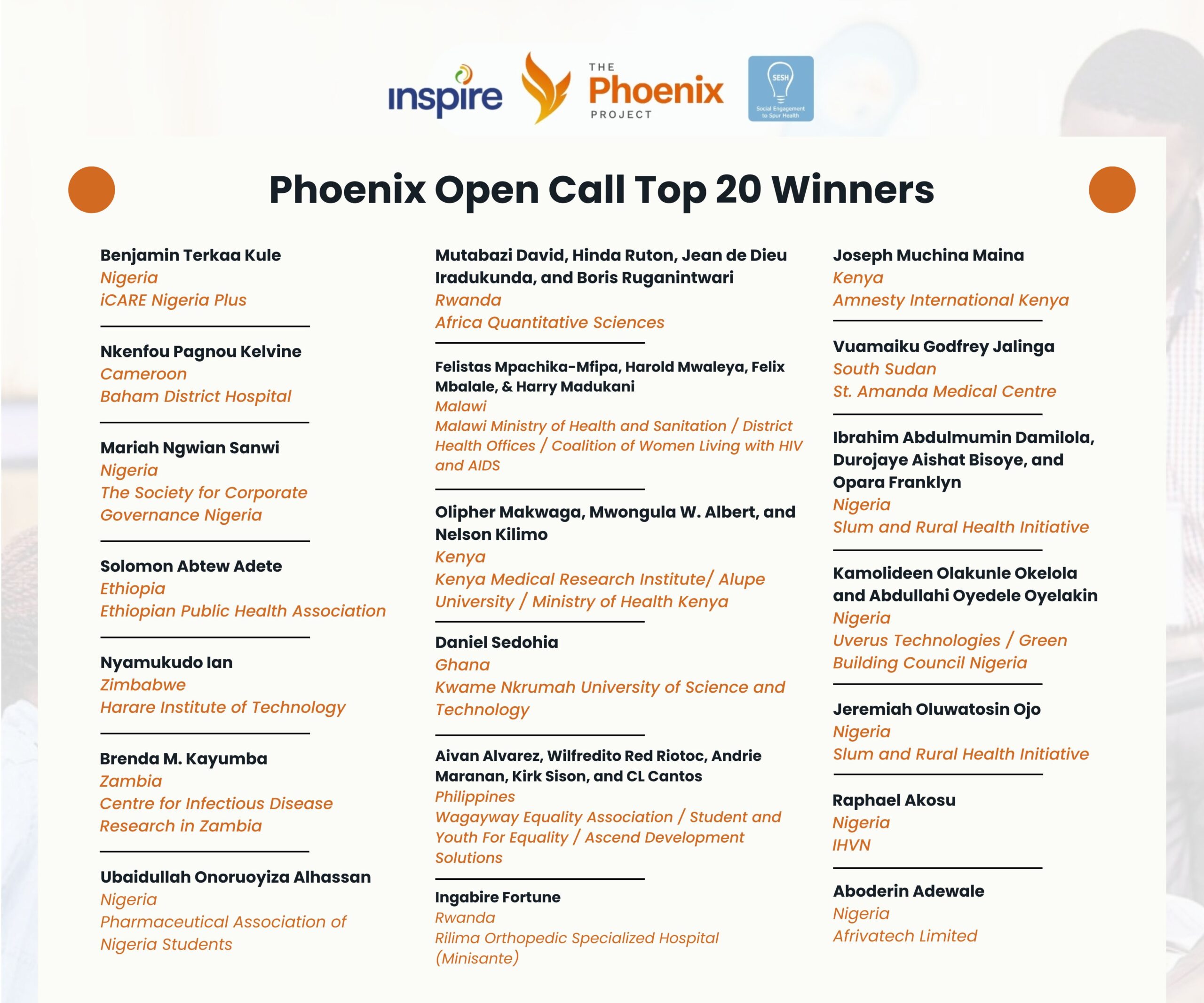
After a rigorous review process, we are pleased to announce the Top 20 Winners of the Phoenix Open Call. Submissions were evaluated based on their relevance to the challenge, clarity and conciseness, innovation and practicality, feasibility and scalability, and their commitment to equity and meaningful community engagement. Special emphasis was placed on solutions grounded in real-world experience, lessons learned, and evidence-informed approaches that can be adapted across diverse settings.
Common Themes

Across regions and contexts, several shared themes emerged. Many finalists proposed locally grounded models that reduce reliance on external funding, including community-driven revenue generation and cost-sharing approaches. Others emphasized peer-led distribution and support networks that lower patient costs and improve continuity of care. Several submissions also highlighted innovative incentive structures to retain health workers when formal systems struggle.

Collectively, these ideas reflect a shift toward resilience, adaptability, and community ownership.

What’s Next

The Top Four Winners will be recognized at the PATC³H-IN Conference in Lagos, Nigeria, where they will present their ideas during a panel session and engage with policymakers, funders, and collaborators. These finalists will receive full conference sponsorship, including airfare, accommodation, and visa costs.

All 20 finalists will receive cash awards ranging from $400 to $1000. Additionally, all eligible participants will receive certificates of participation in recognition of their contributions.

The Phoenix team is also working on a manuscript based on the analysis of data generated through this global crowdsourcing open call. This manuscript will examine cross-cutting insights, implementation strategies, and emerging patterns from submissions across regions, with the aim of contributing to the evidence base on sustaining HIV services in resource-constrained settings.

Thank you

We extend our sincere appreciation to the individuals and teams whose submissions did not make the final 20. The review process involved difficult decisions, and every submission contributed meaningfully to our collective understanding of what sustainable HIV service delivery can look like across diverse settings.

We are deeply grateful to the Phoenix Open Call steering committee, organizing team, judges, and our partner organizations—INSPIRE, SESH, LIGHT, AVAC, 4Youth By Youth, NIMR, and PATC³H-IN, whose collective effort made this initiative possible.
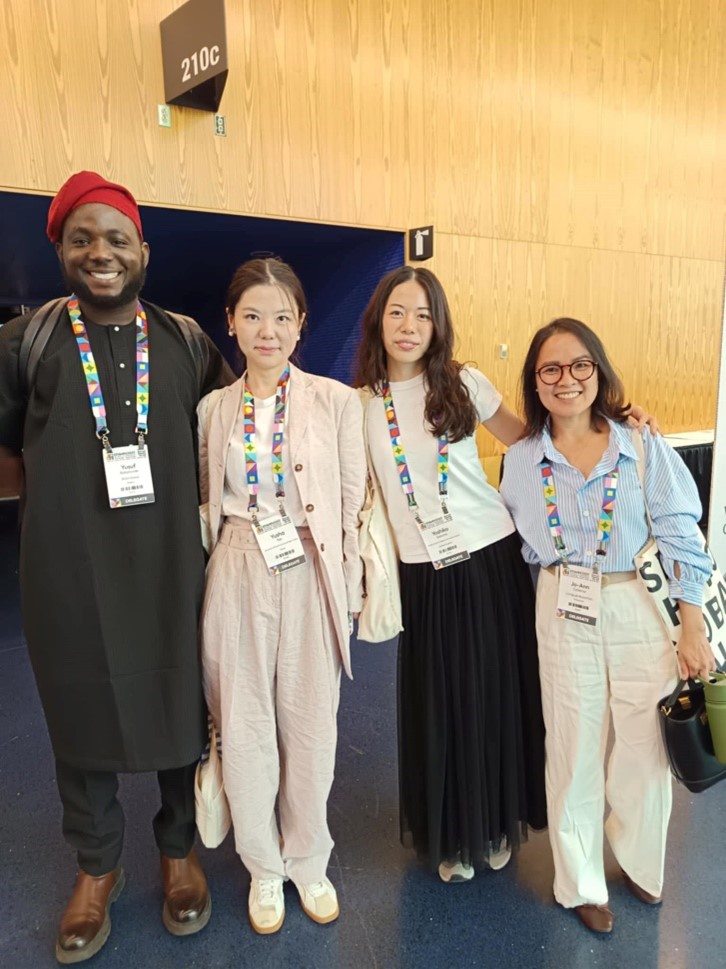
Co-Creating Change: Reflections from INSPIRE Finalists in Montreal

Co-Creating Change: Reflections from INSPIRE Finalists in Montreal

Guest Authors: Jo-Ann Caberoy (Philippines) and William Muthama (Kenya), INSPIRE Youth Co-creation Open Call Finalists

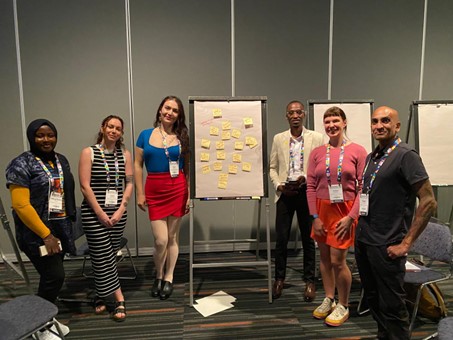
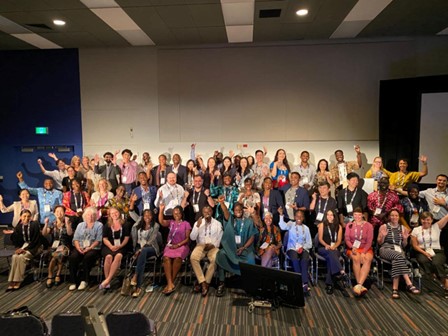
At the STI & HIV World Congress 2025 in Montreal, Canada, INSPIRE finalists joined a global co-creation workshop that brought together researchers, youth advocates, and communities to explore new ways of addressing sexual and reproductive health challenges. For INSPIRE, this was a proud moment, seeing young leaders not only participate but shape conversations on how inclusive, youth-driven solutions can take root.

The reflections of these finalists capture the spirit of collaboration, storytelling, and shared power that defined the workshop. This piece brings their voices together to highlight the lessons they learned, their personal experiences, and why co-creation is central to building more sustainable health solutions.

Why co-creation matters

Too often, sexual health interventions are designed for communities rather than with them. Both finalists agreed that the workshop challenged this traditional model by positioning youth and people with lived experiences as active co-creators.

One finalist explained, “Communities, including youth, co-define what matters. Lived experiences are treated as expertise. Solutions are developed and owned together. It’s not just engagement—it’s power-sharing.” For them, co-creation represented more than participation, it was about genuine collaboration and equitable partnerships that give young people the opportunity to lead.

Lessons from Montreal

The workshop unfolded in three parts: opening presentations and panel discussions, hands-on co-creation activities, and finally, refining the draft TDR/UNICEF practical guide on youth co-creation in health research. This design ensured that participants were not passive listeners but active contributors throughout.

For one finalist, authenticity stood out as a central value, “Personal stories and lived experiences enriched every conversation. Asking the right questions fostered genuine participation, not just token engagement.”

Another finalist noted how the Congress as a whole was a turning point in how young people are seen, “It was inspiring to see young people recognized not just as vulnerable groups, but as innovators and active partners in health solutions. The workshop showed that co-creation can and should be integrated even into traditionally hierarchical fields like HIV programming.” These reflections underline how co-creation is not just a method but a mindset shift, one that insists on valuing diverse voices and creating equitable space for dialogue.

The power of storytelling

Both finalists emphasized the transformative role of storytelling. One, who founded Youth Pulse in Kenya, shared how the co-creation approach deepened their belief in the power of stories to shift narratives, “In my work as a journalist, I’ve always believed in the power of storytelling, not just to inform, but to spark change. At Youth Pulse, storytelling is no longer a one-sided report—it’s a collaborative tool, letting young people shape their own stories.” This message resonated across the workshop, where stories from different cultural and professional backgrounds highlighted a shared question: How do we build solutions that truly reflect the people they’re meant to serve?

Collaboration and community spirit

Beyond structured sessions, the workshop fostered friendships and a spirit of collective action. Participants left not only with new insights but also with solidarity that transcended borders. “It was comforting to know that despite our diversity, we understood that working with people, especially those with lived experience requires openness and humility. We ended the day with new ideas and new friends rallying together against STIs and HIV,” one finalist recalled. This spirit of community was perhaps one of the most impactful outcomes. It showed that co-creation is not just about producing outputs, it is about building networks of trust and collaboration that continue long after the workshop ends.

Looking ahead

For both finalists, Montreal was not an endpoint but a beginning. One finalist left motivated to expand co-creation beyond mental health to sexual and reproductive health, youth civic engagement, and media production. “They say youth are the future, but co-creation taught me we are already the present. If given the space, tools, and respect, we don’t just contribute, we lead the way.”

The other finalist called the workshop “more than just a workshop—it’s a movement,” emphasizing the need to continue building participatory approaches in health research and advocacy. “We look forward to the outcomes of our sessions, which will contribute to enhancing community engagement and co-creating inclusive STI campaigns led by young people.”

Taken together, these reflections underline a powerful truth: co-creation transforms the way health challenges are addressed by valuing lived experiences, fostering authentic collaboration, and amplifying youth leadership. The STI & HIV World Congress 2025 Co-creation workshop was not just a space for dialogue, it was proof that when young people are given the opportunity to co-create, they bring innovation, resilience, and solutions that can reshape the future of global health.