
When Data Isn’t Enough: Listening to Youth Living With HIV

When Data Isn’t Enough: Listening to Youth Living With HIV

Written by: Damilola Ayowole, Temitope Oluwadare, Soneye Islamiat & Azees Ayotunde | Team Abeokuta, Nigeria

We have spent years working with numbers, prevalence rates, treatment coverage, viral suppression targets. Data shapes how we understand HIV, how we design programs, and how we measure success. Yet, during the designathon that birthed HIV-In-Colors, we confronted a difficult truth: data alone does not tell the full story of adolescents and young people living with HIV.

That realization became both the greatest challenge and the most important lesson of this project.


The challenge: when evidence feels incomplete

As public health physicians, we are trained to trust evidence. Surveys, indicators, and clinical outcomes guide our decisions. But as we began designing HIV-In-Colors, we felt an uncomfortable gap between what the data said and what young people actually lived.

The numbers told us that adolescents were on treatment. They did not tell us how it felt to hide medication from friends, to fear disclosure at school, or to internalize stigma long after a clinic visit ended. The data showed retention rates; it did not show shame, silence, or resilience.

At the designathon, our initial instinct was to “strengthen psychosocial support” in familiar ways, add counseling sessions, integrate screening tools, train providers. These ideas were evidence-based, but they were also top-down. We were designing for young people, not with them.

That was our first major challenge: unlearning professional certainty.


Learning to listen differently

The designathon forced us to slow down and listen, not through questionnaires, but through stories. Conversations with fellow participants, mentors, and youth advocates pushed us to ask a different question: What if young people could show us their experiences instead of explaining them?

That question reshaped the project.

Photovoice emerged not simply as a research method, but as a listening tool we needed to learn. The idea that adolescents could use images to document stigma, hope, isolation, or healing shifted the balance of power. Instead of extracting information, we created space for expression.

This approach challenged us deeply. As researchers, we value structure, defined tools, measurable outcomes, clear endpoints. Photovoice resists rigidity. It is emotional, unpredictable, and deeply personal. It demanded trust: trust in participants, trust in the process, and trust that meaning could emerge without being forced.

The designathon lesson: Youth are not just beneficiaries

One of the most powerful lessons from the designathon was realizing that youth expertise is not symbolic, it is practical. When adolescents and young people living with HIV became central to the design conversation, the intervention evolved in ways we had not anticipated.

Healing circles, for example, were initially framed as group therapy sessions. Youth feedback transformed them into something broader: safe, recurring spaces for shared silence, laughter, anger, and belonging. The emphasis shifted from “intervention delivery” to community formation.

We learned that stigma is not only external. Many young people spoke about stigma they had absorbed into their self-identity. No survey captured that adequately. Their stories did.

Listening also revealed constraints we might otherwise have overlooked, fear of being photographed, concerns about confidentiality, emotional fatigue. These realities shaped our ethical safeguards and implementation strategies far more effectively than any protocol draft.


When impact is not immediately measurable

Another challenge was resisting the urge to define success too narrowly. In public health, we often prioritize quick wins and easily measurable outcomes. But psychosocial healing does not follow linear timelines.

Some lessons from HIV-In-Colors were subtle: a participant speaking for the first time in a group, someone choosing a metaphor instead of words, another deciding not to share an image publicly, and feeling empowered by that choice.

The designathon helped us recognize that process itself can be impact. Creating a safe space is not a precursor to intervention; it is the intervention.

This reframing was uncomfortable. It required us to accept outcomes that are harder to quantify but no less real.


What we will carry forward

Looking back, the most important lesson from HIV-In-Colors is this: programs fail when we confuse participation with inclusion. Inviting youth to attend sessions is not the same as inviting them to shape meaning.

Listening requires surrender of expertise, of timelines, of control. But it also creates interventions that breathe, adapt, and endure.

The designathon strengthened our belief that innovation in HIV care does not always mean new technology or complex systems. Sometimes, it means creating space for young people to be seen, heard, and trusted as narrators of their own lives.

As we move forward with this project and others, we carry a quieter confidence. We still value data deeply, but we now ask different questions of it. We look for the stories it misses and the voices it cannot capture.

Because when it comes to adolescents and young people living with HIV, listening is not optional, it is the work.
Beyond the Clinic Walls: Rethinking HIV Prevention Through Rural Drug Shops

Beyond the Clinic Walls: Rethinking HIV Prevention Through Rural Drug Shops

Written by: Nomujuni Natukwatsa, Florence Mwangwa, and Collins Ampaire | Team Gamba Link, Uganda

What if the first conversation about HIV prevent ion didn’t happen in a hospital but in a small drug shop down the road?

In many rural communities across Uganda, young people rarely walk into hospitals to ask about sexual health products. Instead, they rely on community drug shops and trusted community care providers as their first point of contact for sexual health needs which may include HIV prevention services. Yet these accessible and trusted spaces are often excluded from formal HIV prevention strategies. 

Our inspiration

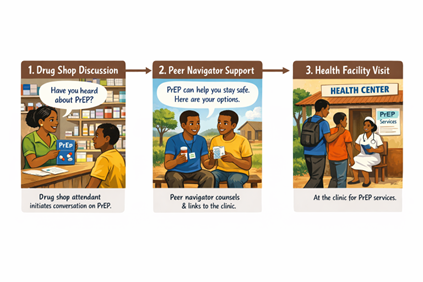
The INSPIRE Designathon provided a platform for us to develop the Gamba Link project. Gamba means to speak, tell or address in Bantu languages in Uganda. Our project aims to onboard community medicine providers by introducing them to structured HIV prevention information in order to support them to speak to young people about accessing biomedical HIV prevention products. The Gamba Link project developed the PREP-Go toolkit, a tool box of familiar communication tools to support community medicine providers like drug shop attendants to initiate youth-friendly, non-judgmental conversations about using HIV prevention products and link adolescents and young adults (AYAs) to peer navigators for PrEP services at formal health facilities. 

The challenge that birthed Gamba Link

Pre-exposure prophylaxis (PrEP) and post-exposure prophylaxis (PEP) are proven, effective HIV prevention tools. However, uptake among adolescents and young adults (15–24 years), particularly in rural areas, remains low. Young adolescents who are just beginning their sexual health journeys (15-20 years) are particularly vulnerable. Structural barriers such as low knowledge, fear of discussing sexual related matter with authority figures, stigma, limited youth-friendly services, and weak referral systems continue to stand in the way. 

Through community engagement and prior evidence, we learned an important insight — many rural youth do go and seek sexual health products from trusted community drug shops. These spaces are informal, familiar, and discreet. Despite this, drug shop attendants are rarely equipped with the confidence, language, or tools to discuss sensitive topics like HIV prevention. 

This gap presented both a challenge and an opportunity.


Turning community drug shops into gateways for HIV prevention access

We designed PREP-Go, a structured communication toolkit that supports drug shop attendants to confidently and non-judgmentally initiate conversations about accessing HIV prevention with the help of age appropriate support through peer navigators, who provide PrEP in formal health services. 

Because community drug shops are not yet authorized to prescribe PrEP, we believe PREP-Go toolkit enables them to participate in HIV prevention actively by:

  • Arousing curiosity about PrEP products 
  • Sharing accurate, stigma-free PrEP information 
  • Providing a clear referral pathway to supportive PrEP providers 

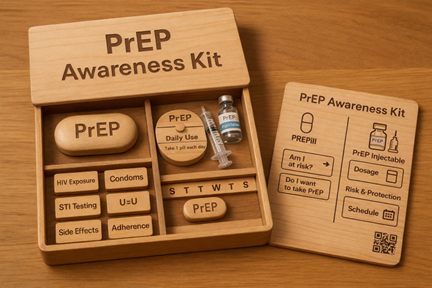
The toolkit includes a simple poster with visual information on who needs PrEP and how to access it, flash cards with PrEP choices, and a short, animated video to watch privately or share with acquaintances. All participating shops will have the name and phone contact of the nearest PrEP peer navigator. 

Designing with, not for, the community

We engaged multiple stakeholders from the start: adolescents and young adults, drug shop attendants, and peer navigators. Their lived experiences helped shape every design decision. 

Drug shop attendants told us they often wanted to help young people but feared saying the wrong things which would scare away their customers. Youth shared that they valued confidentiality, discretion, and respectful communication more than medical expertise. Peer navigators emphasized the importance of building trust in the communities. These insights informed a key design principle: keep it simple, visual, supportive, and scalable.

Testing the solution in the real world

The PREP-Go tool kit is being tested through a qualitative pilot study in four rural community pharmacies and drug shops in Lyantonde District of southwestern Uganda. The study uses a pre- and post-intervention design to assess feasibility, acceptability, fidelity, and sustainability. 

To understand how the toolkit works in practice, we are collecting data from: 

  • Drug shop attendants who are using the toolkit 
  • Peer navigators supporting referrals 
  • Trained youth mystery clients observing real interactions

By combining focus group discussions, in-depth interviews, and mystery client visit reports, we aim to capture honest feedback on how youth experience PrEP conversations in these informal health settings. 

Why this matters for youth

Young people in rural communities face a disproportionate risk of HIV due to social vulnerability, early sexual debut, limited access to services, and stigma. By bringing youth acceptable PrEP conversations closer to where youth already are, the PREP-Go toolkit helps normalize HIV prevention conversations even in commercial spaces and reduces missed opportunities for seeking these services. 

Equally important, the project builds youth leadership. Peer navigators and mystery clients gain skills in advocacy, communication, and community engagement — strengthening local capacity beyond the project lifespan. 

Looking ahead

We envision a world where talking about HIV prevention is as normal, stigma-free, and accessible as buying pain relief medicine at a drug shop. 

Through the PREP-Go toolkit, we test if well-designed communication tools can unlock big changes in how communities approach HIV prevention. With continued collaboration, learning, and refinement, this model has the potential to transform rural HIV prevention across Uganda and similar settings. 

Innovation does not always require new buildings or complex technologies. Sometimes, it starts with the right tools sparking a conversation among willing people. 

The Unseen Scars: Why Family Rejection Fuels Suicide in Adolescents Living with HIV

The Unseen Scars: Why Family Rejection Fuels Suicide in Adolescents Living with HIV

Written by: Aishat Adedoyin Koledowo, Co-Chair INSPIRE Youth Advisory Board, S-ITEST, Nigeria

Family should be an unshakeable source of love, safety, and understanding for young people. After all, it provides the foundation upon which they build the resilience needed to face the world’s challenges. Yet, for far too many adolescents, home becomes the first place of rejection.

Although these issues don’t often make headlines, abuse and stigmatization within families can drive suicidal thoughts and actions among young people with HIV. While society often points fingers at generic causes like “peer pressure” or “mental weakness,” we rarely discuss the invisible crisis unfolding behind closed doors: the isolation, the relentless verbal attacks, abuse and the constant reminder of being “different” and “useless” delivered by the people meant to protect them.

The Silent Abuse: What Stigma Sounds Like at Home

Stigma from family members is rarely a single, overt act; instead, it’s a slow-acting poison that manifests as emotional neglect, physical distancing, and cruel language, creating a deep wound of exclusion. This rejection is often rooted in fear and misinformation about HIV transmission, leading to subtle but devastating microaggressions that establish physical and emotional distance, such as a family member pulling back and instructing: “Don’t share cups with me. You need your own plate. Don’t use this! Don’t use that!” Stigma often escalates into emotional abuse that harms the adolescent’s self-esteem and future hopes, cutting deepest because it comes from a primary caregiver. It may sound like: “You are a useless child. You will never amount to anything, and this is your punishment,” or the harsh accusation of bringing shame upon the family. An adolescent, still navigating their emotional development and identity, internalizes this consistent rejection as absolute confirmation that “I am unworthy of love.”

The Breaking Point: From Stigma to Suicidal Thought

Adolescents living with HIV already manage complex challenges, including a strict medication schedule, potential body changes, and the ever-present fear of disclosure. When these difficulties are relentlessly compounded by family rejection or abuse including physical violence, harsh punishments, or deliberate social isolation to “protect the family image” their emotional resilience shatters. These experiences are direct fuel for depression, which is the single biggest predictor of suicide. Without a foundation of emotional support, young people internalize the shame until it morphs into profound hopelessness. Their inner dialogue, once focused on coping, becomes riddled with crushing anxiety and self-doubt, leading to desperate questions like, “how will I ever tell my partner about this when my own mother won’t touch me?” and, “will I ever be able to be someone important in life, or am I just a burden?” This progression of shame and withdrawal fuels suicidal ideation and a feeling that “I just want to end it all”. The tragedy is that these young people are not succumbing to the virus; they are tragically succumbing to the condemnation that has replaced the compassion they desperately need.

Stories Behind the Silent Statistics

Behind every statistic detailing youth suicide and HIV, there is a devastating, preventable story. Consider the case of a teenage girl who stopped taking her essential ARV medication simply because her mother would only communicate with her via notes, labeling her “a disgrace.” In this scenario, the fear of confrontation and rejection became a greater threat than the disease itself. There was also a boy who attempted suicide after being severely beaten for simply disclosing his status to a trusted teacher, believing he had ruined his family’s reputation forever. These are not isolated incidents; they represent countless silent battles occurring in homes worldwide where fear, often fueled by profound misinformation, tragically trumps basic human empathy and a child’s fundamental right to safety and acceptance.

A Call for Compassion

When stigma begins at home, the process of healing must also begin there. Families and communities possess the power to save lives by fundamentally changing their response from one of fear to one based on facts, and from one of shame to one of unwavering support. This begins with education, recognizing that HIV is a manageable, chronic condition, and proactively debunking myths, such as the idea that sharing cups transmits the virus. Crucially, it demands unconditional love, as research has confirmed that just one supportive adult can drastically reduce the risk of suicide among vulnerable youth. Promoting open conversations is vital, ensuring adolescents have safe spaces to ask their biggest, scariest questions about their future, relationships, and identity without the fear of judgment. For families struggling to cope, seeking professional help through counseling may help them to process the diagnosis and rebuild trust. Ultimately, governments and NGOs must recognize this link by integrating robust, accessible mental health services directly into adolescent HIV care programs, ensuring the treatment of the mind is prioritized as much as the treatment of the body.

Choose Compassion, Save Lives

Adolescents living with HIV do not need pity; they need understanding, respect, and unconditional love. When families make the courageous choice of compassion over shame, they do far more than just save a relationship they save a life. It is incumbent upon all of us to recognize the silent crisis of family stigmatization and play our part in ending the suicides it tragically fuels. If you know an adolescent living with HIV, be the reason they feel seen and valued—not ashamed and alone. We must collectively speak up against family stigma and start the necessary conversation today.

Under the Stairs: What One Conversation Taught Us About Invisible Barriers to HIV Care

Under the Stairs: What One Conversation Taught Us About Invisible Barriers to HIV Care

Guest Authors: Monica Gbuchie, Ah’mad Akande, Fana-Granville Loizy | Team EqualCare, Nigeria

We met Ada during a community outreach program. She was seated underneath the stairs of the community townhall, keeping to herself, her crutches leaning against the wall. From afar, she looked like someone simply waiting to be attended to, but when we approached her, we learned she had been there for quite some time. She had come alone because her mother could not accompany her, and even though the journey was difficult, she refused to miss another opportunity to be seen. In that moment, she reminded us how much strength it takes to navigate the healthcare system when you are living with both a disability and HIV. Her presence there was an act of quiet courage.

During our conversation with her, she told us she had missed several visits in the past, not because she wanted to, but because transport was unreliable and she relied heavily on others to accompany her. Each missed appointment left her feeling like she was losing control of her own care. She wished she had a way to stay connected to her healthcare team even when she could not make it to the clinic.

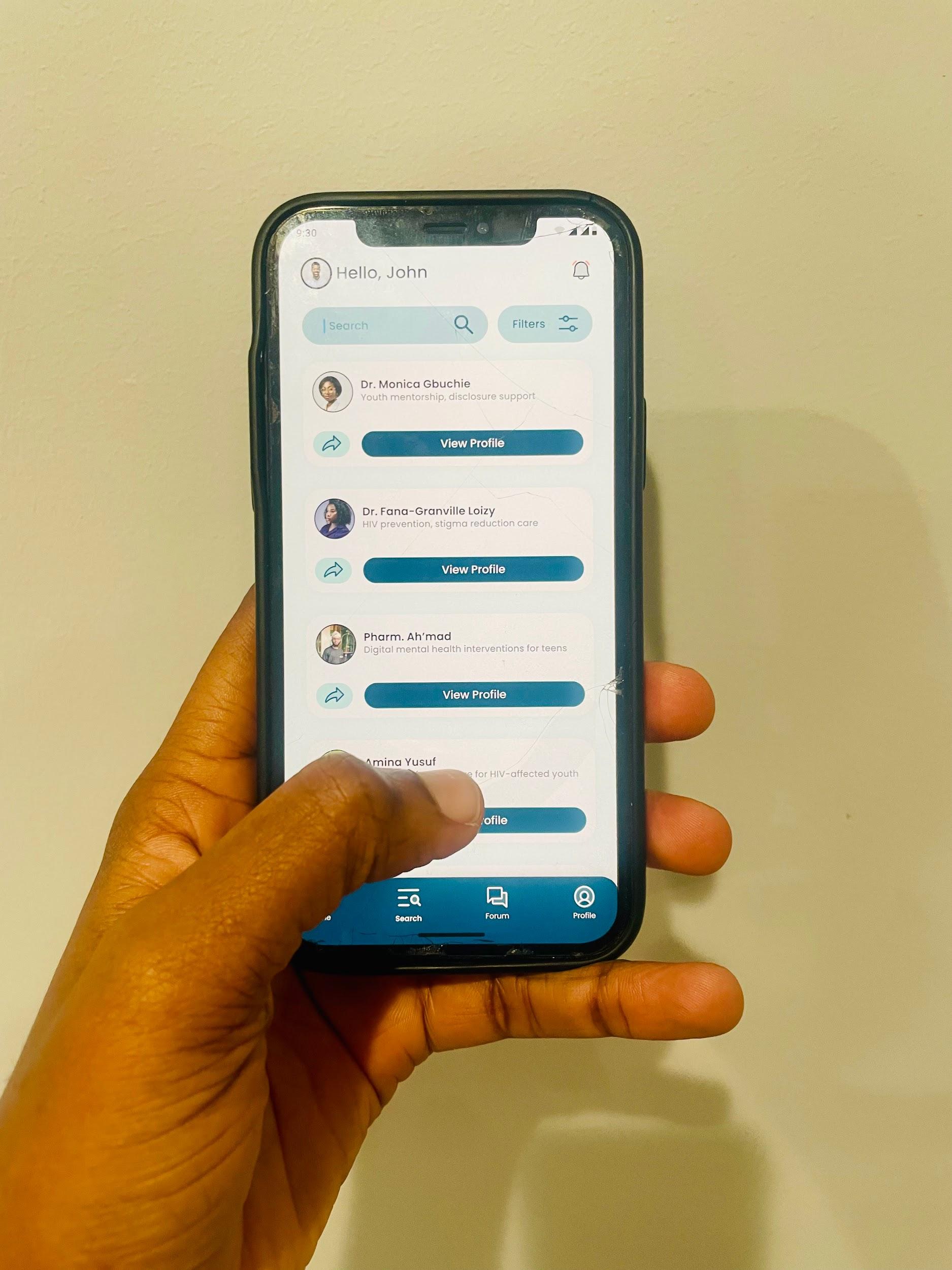
This made us even more resolute in our commitment to develop EqualCare, a digital tool designed to support young people living with HIV and disabilities. EqualCare provides treatment reminders, easy access to trustworthy health information, and a peer navigation system. As we shared the idea with different people in our circle, many were genuinely excited about its potential. They said that having someone to talk to on days when they could not travel to health facilities would make young people feel less alone. We also received feedback that the app’s supportive features could be life changing and might even be expanded in the future to serve other persons with disabilities living with chronic conditions beyond HIV. Our conversation with Ada made these invisible barriers even clearer, and they continue to guide the work we do.

Challenges So Far and Lessons Learnt

Developing EqualCare has been a real learning experience for our team. We quickly discovered that true accessibility is not achieved through a single feature. It requires thoughtful design, simple navigation, and content that works for young people with different physical abilities and digital realities. One of our biggest hurdles has been finding experts with the right technical skills to build an app that can genuinely support users with diverse disabilities. Beyond technology, securing buy-in from stakeholders has been difficult, mainly because many clinics do not keep records of young people living with both HIV and disabilities. This lack of data makes it harder to identify and reach the very group the app is meant to serve. Early survey responses highlighted this gap and reminded us how invisible this population can be within health systems.

Another is finding the community itself and earning trust has required patience. Many young people have had mixed experiences with digital tools or health programs, so building confidence has meant showing up consistently and listening closely. These interactions have shaped our understanding more than any formal assessment could.

Along the way, we have learnt that our idea, although ambitious, is needed and we remain committed to getting it right. But it is also clear that we cannot do this alone. Stronger community engagement, supportive stakeholders, and sustainable funding will be essential to move EqualCare forward.

Looking Ahead

Meeting Ada showed us why this work must continue. Collecting feedback will not always be easy. Network challenges, shared phones, and long distances all shape how young people interact with digital tools. But stories like hers show us why we have to keep going. Each experience helps us refine EqualCare into something that reflects real needs rather than assumptions.

Our goal is simple. We want EqualCare to meet young people where they are, instead of expecting them to navigate systems that were never built with their circumstances in mind. Young people living with both disabilities and HIV are often unseen in healthcare settings, and their challenges rarely influence program decisions. They deserve better.

From sitting under the stairs at an outreach event to managing care at home, young people deserve support that fits into their lives. EqualCare is our commitment to designing a tool that finally sees them.

Breaking the Silence: Youth-Led Fight Against HIV Stigma in Northern Nigeria

Breaking the Silence: Youth-Led Fight Against HIV Stigma in Northern Nigeria

Guest Authors: Favour Christiana Ogbuagu, Abubakar Ismail Zango, Makkiyyah Sulaiman Muhammad, and Abdulmalik Ya’u | Youth Against HIV, Nigeria.

This blog post is the second in a series written by teams participating in the 2025 INSPIRE Designathon. Chosen from hundreds of submissions, these teams participated in a dynamic three-day sprint to sharpen their ideas and pitch innovative solutions to a panel of expert judges. Each team received funding to implement, adapt, and scale-up HIV interventions for adolescents and young adults over the coming year.

 In Northern Nigeria, conversations about HIV among adolescents are often silenced by stigma and shame. Studies show that more than nine out of ten young people in Nigeria hold stigmatizing attitudes toward people living with HIV, a reality that discourages testing, treatment, and open discussion.

This stigma weighs even more heavily on adolescent girls, who face layers of judgment tied to gender norms and patriarchal expectations. Many young people internalize these negative messages, hiding their fears, questions, or even their HIV status. Myths persist from the belief that HIV only affects “immoral” people to the idea that it can be cured with traditional medicine. In addition, reliable HIV information is not always available in Hausa, the most widely spoken language in Northern Nigeria. This gap leaves many adolescents uninformed or misinformed.

Our team— Youth Against HIV (YAGH) — saw these challenges firsthand and knew we needed to respond differently. Through the INSPIRE Designathon, we designed a project to:

  • Train peer champions to lead conversations on HIV
  • Strengthen digital tools to include Hausa-language support
  • Establish school-based HIV awareness clubs that can sustain these conversations over time

Why Youth-Led Approaches Matter

Young people often tune out when adults lecture them about HIV. But when the same message comes from a peer – someone who shares their language, humor, and lived experience, it resonates differently.

That is why we placed young people at the center of this intervention. We are training medical students to serve as HIV peer champions not as lecturers, but as conversation starters. Their mission is to create safe spaces where secondary school students feel comfortable asking questions they might otherwise keep hidden.

The Role of Digital Innovation

Language emerged as a key barrier. Much of the available HIV content is in English, leaving many Hausa-speaking adolescents excluded.

To address this, we are strengthening the Youth Leading HIV Awareness Campaign (YOLHAC) digital platform owned by Bridge Connect Africa Initiative by enabling its AI-powered chatbot to function in Hausa during the project period. This allows adolescents to ask questions anonymously, in Hausa or English, and receive accurate, evidence-based answers.

The classroom sessions will open the door to conversation, while the chatbot ensures those conversations can continue privately, at each student’s own pace. For many, that privacy is what makes it possible to ask sensitive questions without fear.

Implementation in Kano: Our Journey

Our journey to this point has been anything but linear. We initially planned to launch in Katsina State, but prolonged ethical clearance processes stalled the timeline. To keep momentum, we pivoted to Kano, which shares Katsina’s cultural and linguistic context.

In September 2025, we successfully trained a dedicated group of YAGH Champions, ten medical students passionate about changing the HIV narrative among their peers. Over two days, they gained skills in:

  • HIV education and stigma reduction
  • Communication and facilitation
  • Digital literacy
  • Professional conduct and community engagement

The sessions were interactive and practical, equipping the champions to confidently reach secondary school students and lead meaningful discussions. This training marked a key milestone: the transition from planning to action.

Lessons Learned So Far

Even before school implementation begins, the training phase has provided valuable insights:

  • Young people are eager to lead. The energy and commitment of our champions confirmed that youth want to be part of the solution, not just passive recipients.
  • Training builds confidence. Many champions had never facilitated HIV discussions before, but left the training prepared and motivated to step into schools with clarity and purpose.
  • Digital tools need visibility. The YOLHAC webpage and chatbot are powerful resources, but they must be actively promoted so students trust and use them.
  • Partnerships are key. Support from schools, teachers, and community leaders will be crucial to gaining access and sustaining the awareness clubs we aim to establish.


Looking Ahead

With the champions trained, the next step is implementation. Over the coming weeks, YAGH champions will visit five selected secondary schools in Kano to lead peer-to-peer HIV awareness sessions. These sessions will not end in the classroom. Students will be introduced to the YOLHAC platform, allowing them to continue learning privately, in their own language, and at their own pace.

We are also committed to establishing HIV Awareness Clubs in these schools. These clubs will serve as safe spaces where students can keep the conversation alive, supported by peer champions and teachers. Robust monitoring and reporting systems are in place to track progress, capture stories, and guide future scale-up to other states in Northern Nigeria.

Our journey so far has been about building a strong foundation, understanding the barriers, designing solutions, and equipping young people to lead the charge.

Training the YAGH champions is just the beginning. As they enter classrooms, they carry more than information; they carry hope, representation, and a promise: that HIV awareness can be youth-led, stigma-free, and accessible to every adolescent, in every language. Combining peer leadership with digital tools is more than an intervention; it is a pathway to breaking the silence and reshaping the narrative around HIV for young people across Northern Nigeria.

And this is only the beginning.