
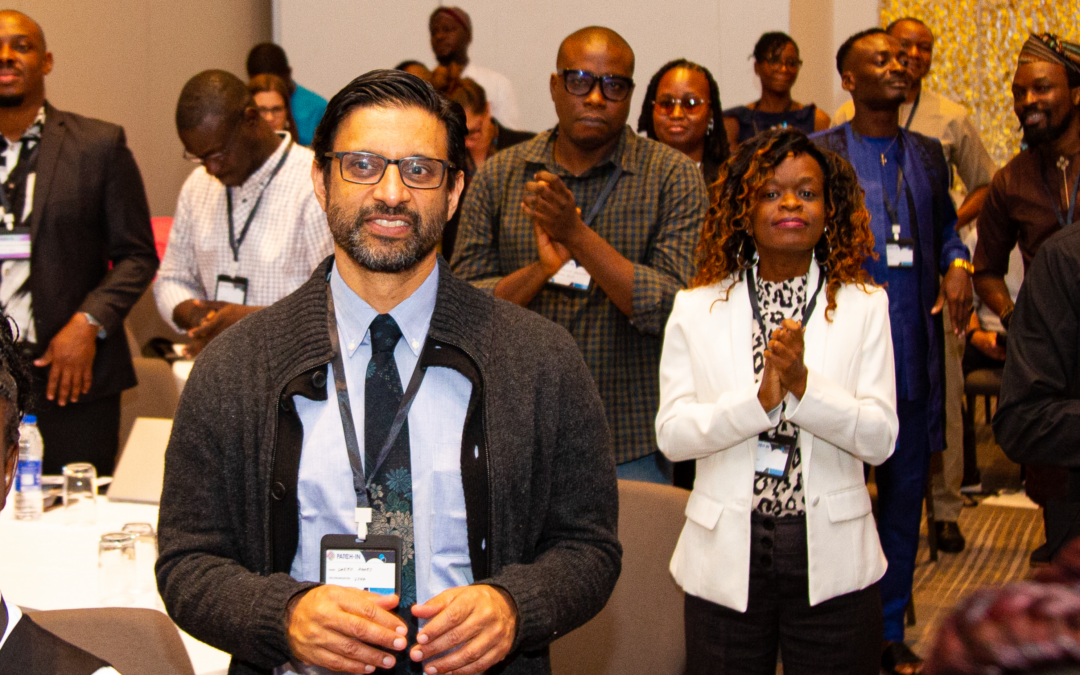
Network Spotlight: Saeed Ahmed
Written and compiled by Emily Hickner-Mantia, Operations Manager for INSPIRE

The Prevention and Treatment through a Comprehensive Care Continuum for HIV-affected Adolescents in Resource Constrained Settings – Implementation Science Network (PATC³H-IN) is made up of many passionate individuals dedicated to youth HIV care and prevention in sub-Saharan Africa. This interview with Dr. Saeed Ahmed marks the first of our Network Spotlight Series, which showcases PATC³H-IN members and the work they do.
Dr. Ahmed is an associate professor of Pediatrics at Baylor College of Medicine who received the 2026 Distinguished Faculty Award. He first came to Malawi in 2006 as part of the inaugural Baylor Pediatric AIDS Corps. In 2007, he and Dr. Maria Kim launched Tingathe (meaning “together we can”), a community-based program in Malawi that utilizes Community Health Workers to improve identification and enrollment into care of HIV-infected and exposed children. Tingathe has grown from a $150,000 pilot to a $15 million program under his leadership.
As part of the PATC³H-IN, Dr. Saeed Ahmed is the principal investigator for VS4A — VITAL Start for Adolescents — a video intervention to improve retention and adherence to ART among adolescents living with HIV in Malawi. We asked Dr. Ahmed about his new role as co-chair of PATC³H-IN, the journal supplement he is leading, and his journey in global health and HIV work. Here’s what he had to say…
To start, tell us a little about yourself and your journey in global health; what drew you to this work, and eventually to PATC³H-IN?
I’m a pediatrician and global health researcher, and much of my career has focused on improving HIV care and health systems for children and adolescents in sub-Saharan Africa, particularly in Malawi. I first began working in Malawi almost exactly 20 years ago at a time when access to HIV treatment for children was still extremely limited. Seeing both the enormous need and what was possible when strong programs were built around patients, families, and communities really shaped the direction of my career. Over the years, my work has expanded from clinical care to implementation science, health systems, and the development and evaluation of models designed to improve access, retention, and outcomes for vulnerable populations. It was therefore very exciting for our project, VS4A, to be included in PATC³H-IN. Adolescents and young people remain one of the populations for whom we have not made enough progress, and the network brings together an extraordinary group of investigators and projects focused specifically on changing that.
You recently stepped into the role of co-chair. What does taking on this leadership position mean to you, and what are you hoping to bring to it?
It comes at a particularly exciting point in the life of the network. Many of the projects are now approaching completion of the primary data-collection phase and moving into analysis and dissemination. Over the next year, there will be an enormous amount of important work, not only within the individual research projects, but also through harmonized analyses and activities that bring together findings across the network. I’m excited to help organize and facilitate that work and, most importantly, to be useful to the clinical research centers (CRCs) and investigators doing it. I see the co-chair role as an opportunity to help create connections across projects, identify areas where the network can accomplish more collectively than any one study could accomplish alone, and make sure that the knowledge being generated ultimately reaches the people who can use it.
Adolescents and young people remain one of the populations for whom we have not made enough progress, and the network brings together an extraordinary group of investigators and projects focused specifically on changing that.
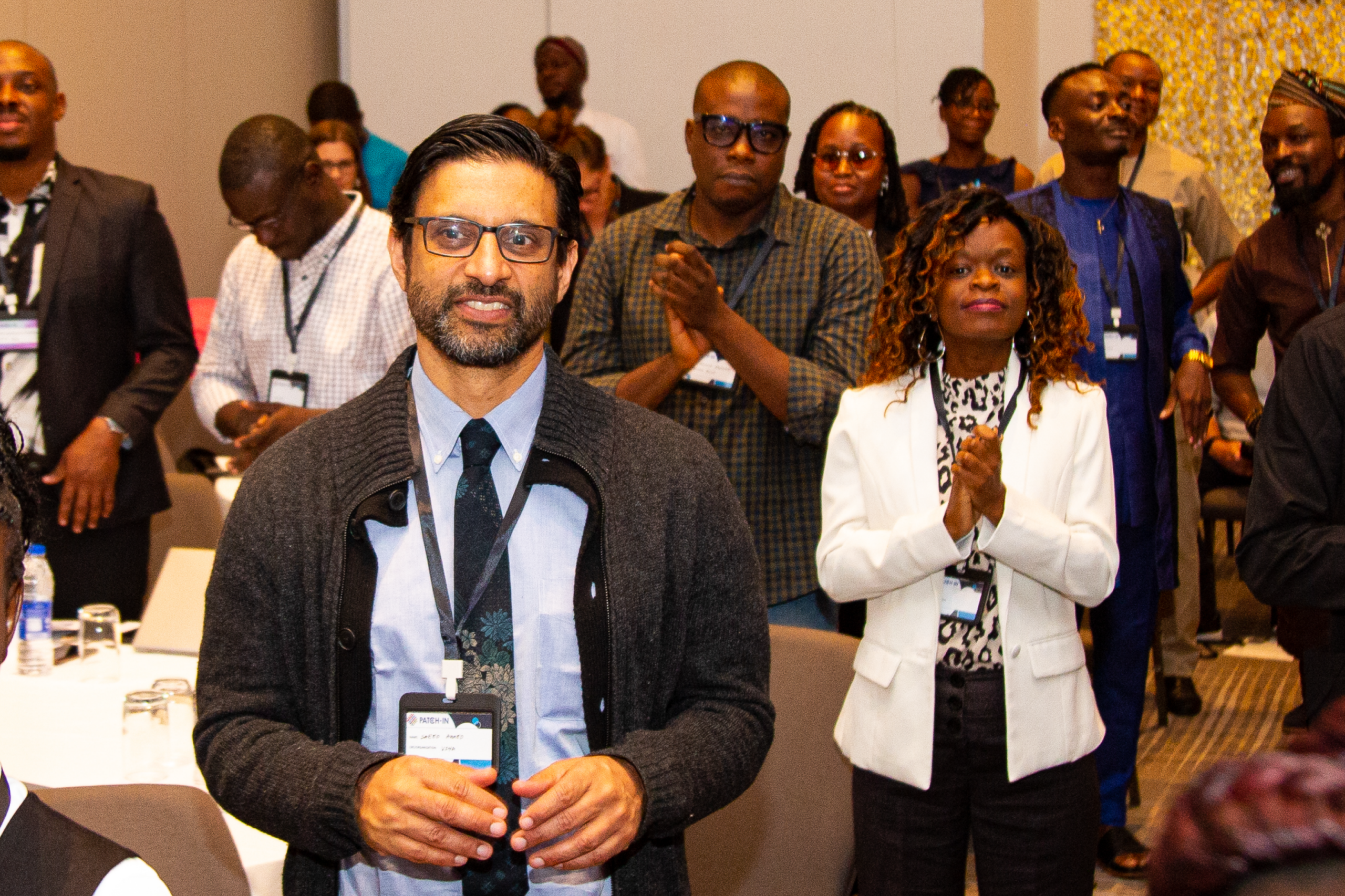
Dr. Saeed Ahmed at the 2026 PATC³H-IN Annual Meeting in Lagos, Nigeria.
You spearheaded the new PATC³H-IN journal supplement. What inspired it, and why did this feel like the right moment to bring it forward?
I’ve been fortunate to help lead journal supplements like this in the past, and I think they can be a very effective way of bringing a coordinated body of work together in one place. Rather than having individual papers appear separately over time, a supplement allows a network to tell a broader story, develop a common theme, and make the connections between studies much more visible. This felt like the right moment because PATC³H-IN has matured into a network with a clear identity and an important collective story to tell. This first supplement introduces the network, the major scientific questions being addressed, and some of the early work emerging from the projects. It also creates a foundation for the much larger body of findings that will follow.
Across the articles, were there emerging themes that stood out to you, or findings that genuinely surprised you?
Because this is the first supplement, many of the articles are focused on study protocols, conceptual frameworks, and early qualitative or formative work rather than final trial outcomes. In that sense, I see the supplement less as the culmination of the network’s findings and more as an introduction to the scientific landscape the network is addressing. What does stand out is how clearly the papers illustrate the complexity of improving outcomes for adolescents and young people. Clinical care is only one part of the picture. Mental health, stigma, family and peer relationships, health-system barriers, transitions in care, and the realities of young people’s everyday lives all intersect. The supplement helps define many of those challenges and, importantly, shows the range of approaches being developed to address them. There is much more to come as the studies move into their main analyses.
Who do you most hope reads this supplement? What do you hope it will spark moving forward?
I hope the supplement reaches several audiences: policymakers, implementing partners, researchers, clinicians, and, importantly, adolescents and young people themselves and the organizations that represent them. Adolescents remain an underserved population, and their outcomes still need to improve substantially. PATC³H-IN was created around the idea that we need better evidence, better interventions, and a much deeper understanding of what young people actually need from health systems. My hope is that this supplement is the first installment in a broader body of work from the network that helps move the field forward, from identifying the major barriers young people face, to demonstrating what works, to ultimately influencing policy and implementation. We have an exciting year ahead!