
Announcing the Phoenix Open Call Top 20 Winners: Voices Shaping the Future of HIV Service Sustainability

Announcing the Phoenix Open Call Top 20 Winners: Voices Shaping the Future of HIV Service Sustainability

How can we best sustain HIV services in resource-constrained settings? This was the simple question behind the Phoenix Open Call.

What followed went far beyond answers — it revealed lived experience, practical innovation, and community-driven vision from across the globe.

We received 422 submissions from 34 countries, each reflecting the realities of young people and community leaders working tirelessly to keep HIV services running, often amid shrinking resources, fragile health systems, and shifting donor priorities. Together, these submissions demonstrated both the scale of the challenge and the ingenuity already present within communities

The Phoenix Open Call was designed to surface and amplify solutions that protect existing HIV services, minimize disruptions, and strengthen community and local leadership. The ideas we received affirmed the importance of investing in people closest to the problem, and the solution.

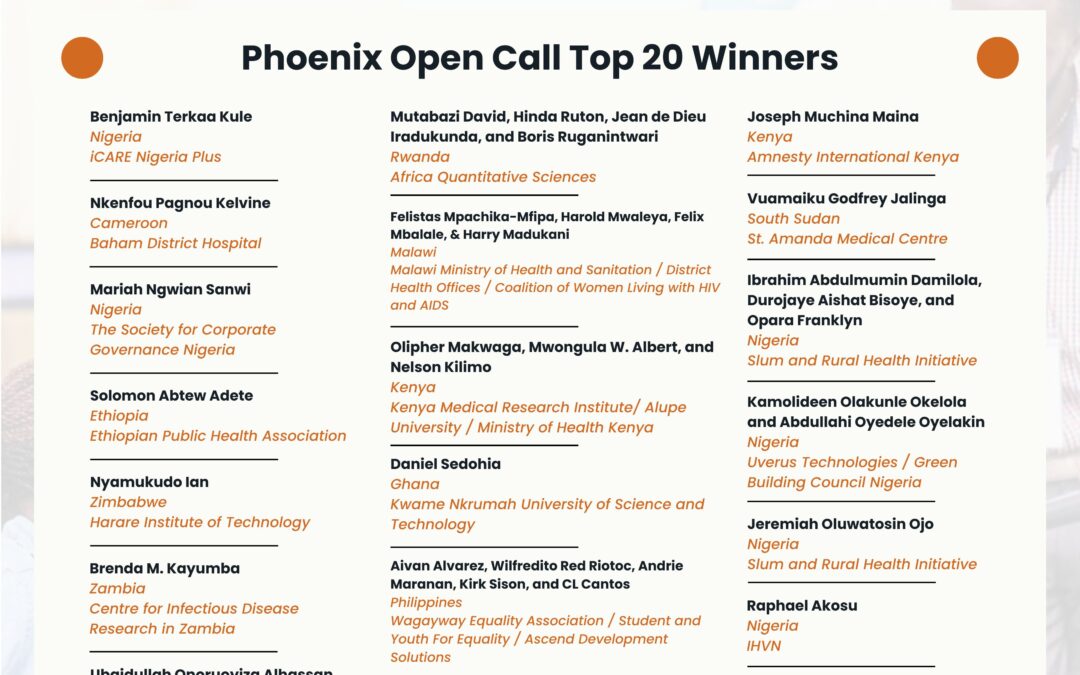
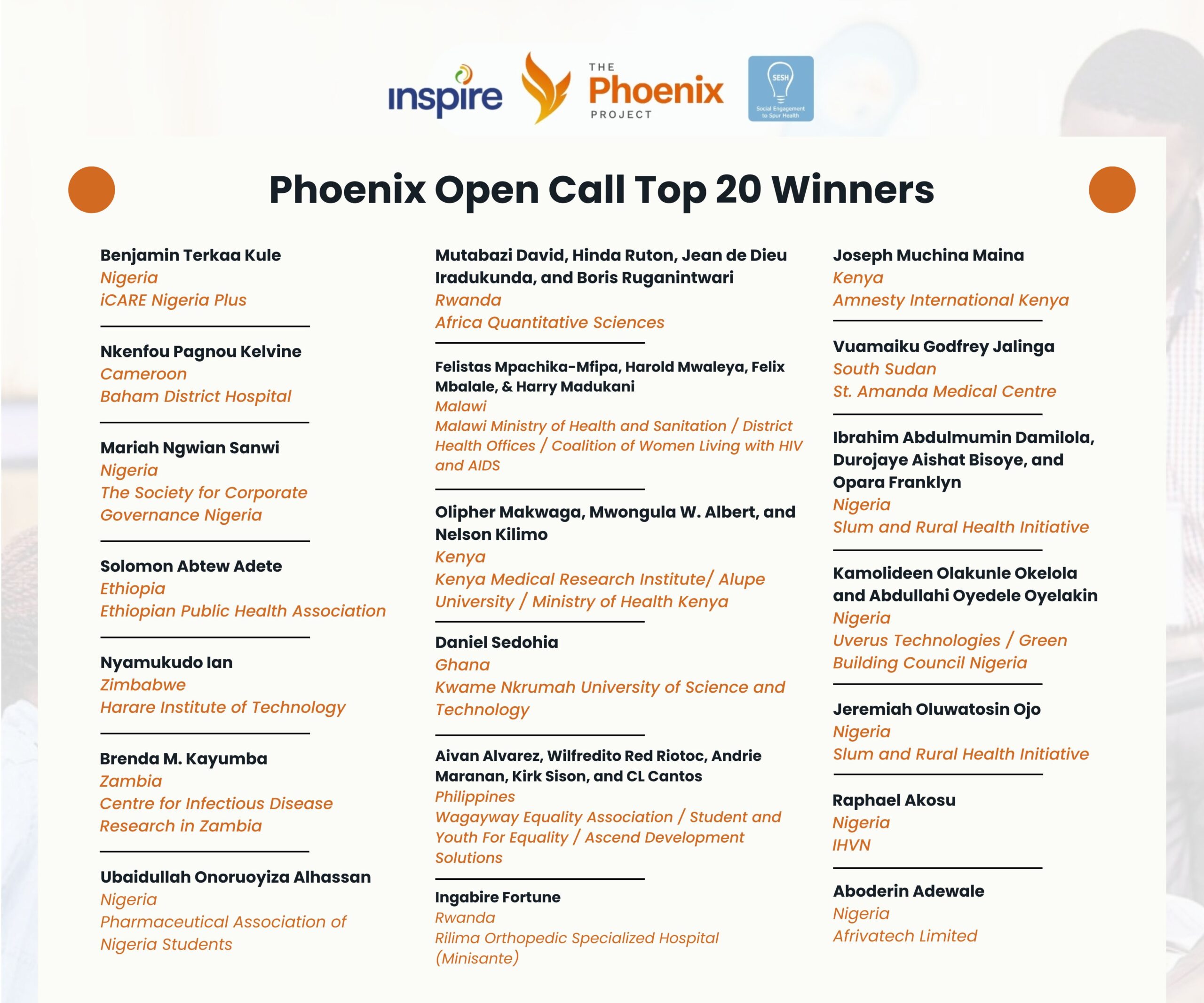
Meet the Top 20 Winners

After a rigorous review process, we are pleased to announce the Top 20 Winners of the Phoenix Open Call. Submissions were evaluated based on their relevance to the challenge, clarity and conciseness, innovation and practicality, feasibility and scalability, and their commitment to equity and meaningful community engagement. Special emphasis was placed on solutions grounded in real-world experience, lessons learned, and evidence-informed approaches that can be adapted across diverse settings.
Common Themes

Across regions and contexts, several shared themes emerged. Many finalists proposed locally grounded models that reduce reliance on external funding, including community-driven revenue generation and cost-sharing approaches. Others emphasized peer-led distribution and support networks that lower patient costs and improve continuity of care. Several submissions also highlighted innovative incentive structures to retain health workers when formal systems struggle.

Collectively, these ideas reflect a shift toward resilience, adaptability, and community ownership.

What’s Next

The Top Four Winners will be recognized at the PATC³H-IN Conference in Lagos, Nigeria, where they will present their ideas during a panel session and engage with policymakers, funders, and collaborators. These finalists will receive full conference sponsorship, including airfare, accommodation, and visa costs.

All 20 finalists will receive cash awards ranging from $400 to $1000. Additionally, all eligible participants will receive certificates of participation in recognition of their contributions.

The Phoenix team is also working on a manuscript based on the analysis of data generated through this global crowdsourcing open call. This manuscript will examine cross-cutting insights, implementation strategies, and emerging patterns from submissions across regions, with the aim of contributing to the evidence base on sustaining HIV services in resource-constrained settings.

Thank you

We extend our sincere appreciation to the individuals and teams whose submissions did not make the final 20. The review process involved difficult decisions, and every submission contributed meaningfully to our collective understanding of what sustainable HIV service delivery can look like across diverse settings.

We are deeply grateful to the Phoenix Open Call steering committee, organizing team, judges, and our partner organizations—INSPIRE, SESH, LIGHT, AVAC, 4Youth By Youth, NIMR, and PATC³H-IN, whose collective effort made this initiative possible.


Meet the New INSPIRE Youth Advisory Board Leadership Team for Year 2

Meet the New INSPIRE Youth Advisory Board Leadership Team for Year 2

The CROSS PATC³H-IN Youth Advisory Board (YAB) is thrilled to begin a new chapter as it welcomes a vibrant and passionate leadership team for Year 2. This year’s transition brings both renewal and continuity: the YAB Co-Chairs were reelected by the YAB CRC members following a thorough review of their applications, reaffirming confidence in their leadership, while the Digital Lead was newly selected through the same rigorous process. Together, this team reinforces our commitment to ensuring that young people remain at the center of efforts to end HIV. The YAB continues to be a driving force for youth advocacy, uniting young leaders whose creativity, lived experiences, and fresh perspectives shape the future of HIV prevention, care, and research.

Leading this year’s team is re-elected Co-Chair Aishat Adedoyin Koledowo from S-I TEST, Nigeria. With a strong background in public health, particularly in infectious diseases and reproductive health research, Aishat has consistently championed youth empowerment and health equity. Now in her second year with the YAB, she remains committed to equipping young people with the knowledge, access, and confidence they need to take charge of their health. Her dedication ensures that youth voices are not only heard but meaningfully embedded in strategic decisions that impact communities across the continent.

Joining her as Co-Chair is re-elected Neale Nomujuni Natukwatsa from MUJHU, Uganda. Neale brings extensive experience in youth leadership, public health, and policy advocacy, along with a deep passion for inclusive youth participation. Known for advancing health rights and social accountability, he is committed to guiding the board’s strategic vision and fostering strong collaboration among members. Together, Aishat and Neale are well positioned to lead the YAB in ways that keep young people at the forefront of HIV-related initiatives across the PATC³H-IN project and its partner networks.

The leadership team also welcomes new digital lead, Nathan Raven from RISE, Kenya as Digital Lead. With a background in fine arts and design, Nathan brings a unique creative spark to the Board. His passion for storytelling and community impact aligns closely with the YAB’s mission of elevating youth voices through digital platforms. Beyond his artistic skill, he aims to bridge communication and advocacy by offering fresh ideas and authentic insights that reflect the realities of young people. His role will be central in leveraging digital tools to share youth stories, amplify key messages, and inspire collective action.

This new leadership team embodies the YAB’s core values of youth-led innovation and shared leadership. Together, they represent a vision where young people are not passive participants but active drivers of change in HIV advocacy, research, and policy. In the year ahead, the YAB plans to deepen youth engagement, strengthen networks, and address ongoing challenges such as stigma, misinformation, and limited access to care.

As the PATC³H-IN Youth Advisory Board begins another impactful year, the energy and dedication of its leadership promise new opportunities for growth, transformation, and meaningful progress. Their continued efforts will amplify youth voices and inspire change across communities.

Youth voices in action: Highlights from the YAB town hall meeting

Youth voices in action: Highlights from the YAB town hall meeting

Contributor:

Stella Chinyonga, Public Health Nurse and Health Advocate and Digital Lead, INSPIRE Youth Advisory Board

On 26 April 2025, INSPIRE’s Cross-PATC³H-IN Youth Advisory Board (YAB) hosted a dynamic virtual town hall meeting themed “Our Future, Our Fight: Youth, Resilience, and HIV/AIDS in Africa”. INSPIRE continues to champion youth-led action in health and implementation science. This town hall created a space for open dialogue and collaboration, giving young people the opportunity to share experiences, propose solutions, and lead the conversation around HIV/AIDS in Africa.

Centering Youth Perspectives

In the lead-up to the town hall, young people aged 10 to 30 from various African countries participated in an anonymous survey. This survey captured insights on HIV status, support group affiliations, and personal experiences with stigma, youth-led initiatives, and the impact of funding gaps.

The results clearly reflected a growing demand for inclusive platforms, accessible services, and youth-driven responses to HIV. Participants expressed a strong desire to lead with creativity, compassion, and courage in the face of ongoing challenges.

Framing the Conversation

The event opened with an overview of the work and mission of the Cross-PATC³H- IN Youth Advisory Board. Professor Joseph Tucker provided key reflections on how recent USAID funding cuts have affected youth-centered HIV programs. He emphasized the critical need for adaptability, innovation, and continued youth engagement to sustain momentum in the face of reduced resources.


Breakout Sessions: Shaping Solutions Together

Participants engaged in breakout sessions focused on three major themes: stigma reduction, youth engagement, and innovative financing.

In the stigma reduction session, facilitator Neale Nomujuni led an open discussion on how stigma manifests in the lives of adolescents and young adults. Participants explored the emotional, social, and institutional barriers created by self-stigma, external stigma, and secondary stigma. They highlighted the urgent need to dismantle misconceptions and harmful narratives, and emphasized the power of storytelling, peer support, and open conversation in breaking down stigma.

The youth engagement session, facilitated by Aisha Adedoyin, explored how young people can meaningfully participate in HIV prevention, treatment, and advocacy. Participants emphasized the importance of leveraging digital platforms like TikTok, creating safe spaces for youth leadership, and providing the tools, education, and resources needed to equip young people as advocates. Recognizing and celebrating youth achievements was also seen as a powerful motivator for continued involvement.

Progress Agboola led the session on innovative financing, focusing on sustainable ways to support youth-led HIV initiatives. Discussions highlighted the effectiveness of community savings groups, crowdfunding, and digital fundraising platforms in promoting local ownership and expanding reach. Participants also discussed the need for strategic partnerships with organizations committed to youth health and development.

Reflections and Strategic Directions

The town hall concluded with a strong sense of momentum and a collective vision for the future. Participants agreed on the importance of creative communication to challenge stigma—using radio, social media, and peer education to drive change.

There was also consensus on the need to mobilize local resources to reduce dependency on external funding and to support sustainability. Strengthening communication and advocacy skills among youth leaders was recognized as essential to building visibility and influence. The need for comprehensive, age-appropriate sexual and reproductive health education and consistent funding for youth-led programming was underscored throughout the discussions.


Looking Ahead

This town hall marked a powerful moment in INSPIRE’s ongoing work to center youth in the HIV response. It reaffirmed that young people are not just participants—they are pioneers. By investing in their leadership, ideas, and lived experiences, we build more inclusive, resilient, and impactful responses to HIV/AIDS.

As INSPIRE continues to promote youth leadership across the continent, the outcomes of this town hall will inform our strategies, shape our collaborations, and fuel the next phase of youth-led change.

When youth are given the space and support to lead, they do not just raise their voices—they transform systems.