
Photos by Tobi Ishola.
Eight dynamic teams of research and community collaborators journeyed across Africa — converging on Lagos, Nigeria for the second annual INSPIRE Designathon Sprint. The energy was electric from the moment teams arrived, bringing bold ideas, deep community knowledge, and a shared passion to change the trajectory of HIV prevention and care for young people. Over three packed days (2-4 May 2026), INSPIRE team members and competing designathon teams dove into expert-led discussions, networking sessions, and tailored coaching — all focused on one transformative challenge: scaling up lenacapavir (LEN) for youth-centered HIV prevention and care across Africa.
LEN represents one of the most promising long-acting HIV prevention and treatment options. LEN is a highly-effective, twice-yearly injectable, which makes adherence easier and delivery more discreet. For adolescents and young adults grappling with access barriers, stigma, and the daily challenges of staying on treatment, LEN isn’t just a new drug — it’s a game-changer.
Similar to a hackathon, during this three-day, intensive sprint, teams work together to design and present their ideas. Eight semifinalist teams — selected from nearly 40 proposals for their innovative solutions — sharpened their project ideas using the guidance and support they have received from experts throughout the sprint. On the final day, teams delivered five-minute pitches to a panel of judges, fielding tough questions and defending their visions. Additionally, each team submitted a PLAN (People Learning, Adapting & Nurturing) diagram and executive summary.
After a careful and intense deliberation, three teams were selected for their originality, relevance, feasibility and scalability. These teams were awarded seed funding to pilot or implement their winning project ideas. Over the course of the next year, these teams will work with INSPIRE and their affiliated PATC³H-IN Clinical Research Center to bring their strategies to life.
Despite the progress made so far in preventing the transmission and care for HIV patients access Africa, access to these services are big issues, making it impossible to reach our young people. This designathon is dedicated to develop creative ideas on how to scale up and sustain HIV interventions for adolescents and young adults.
– Juliet Iwelunmor, INSPIRE Director
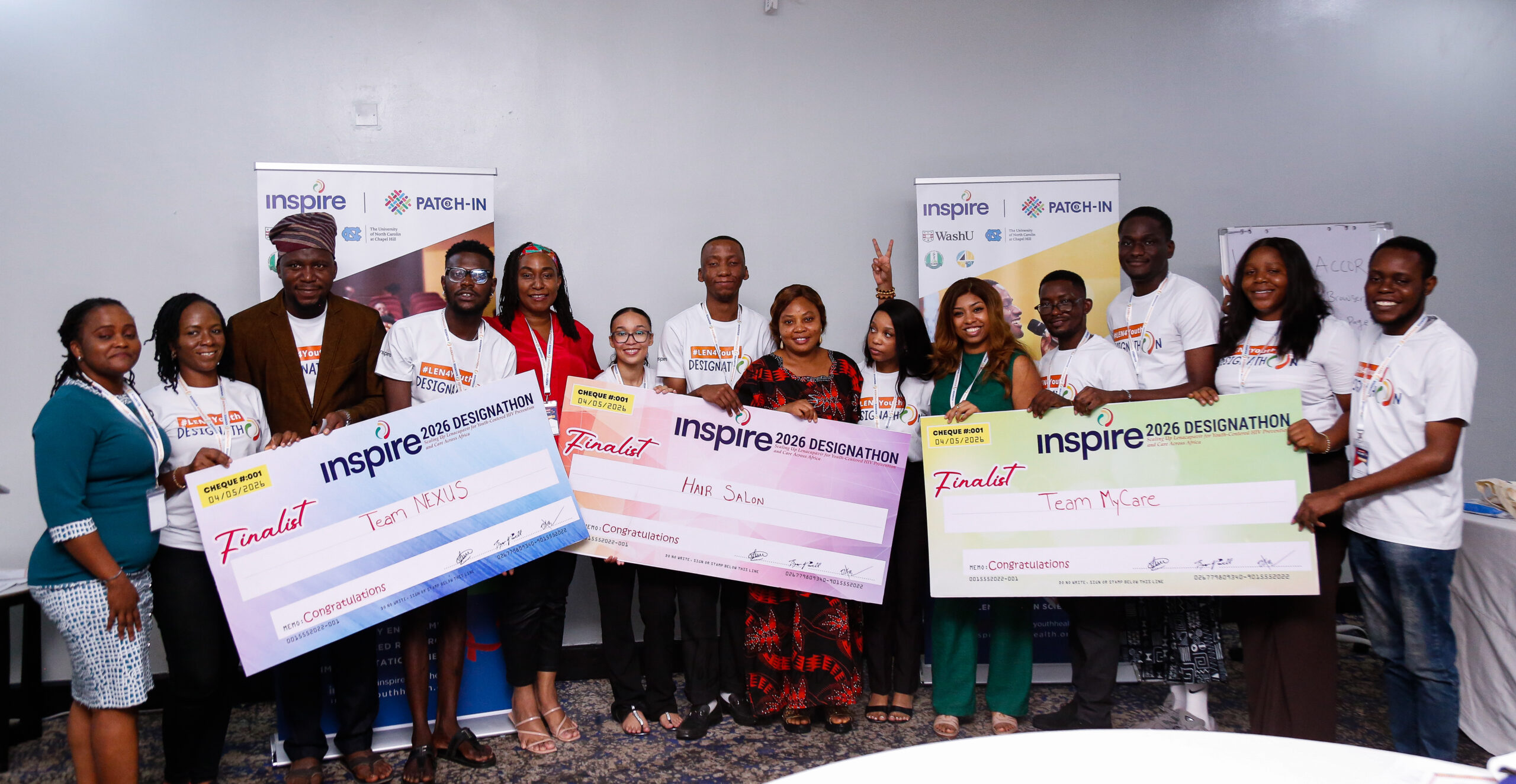
Three Winning Designathon Teams
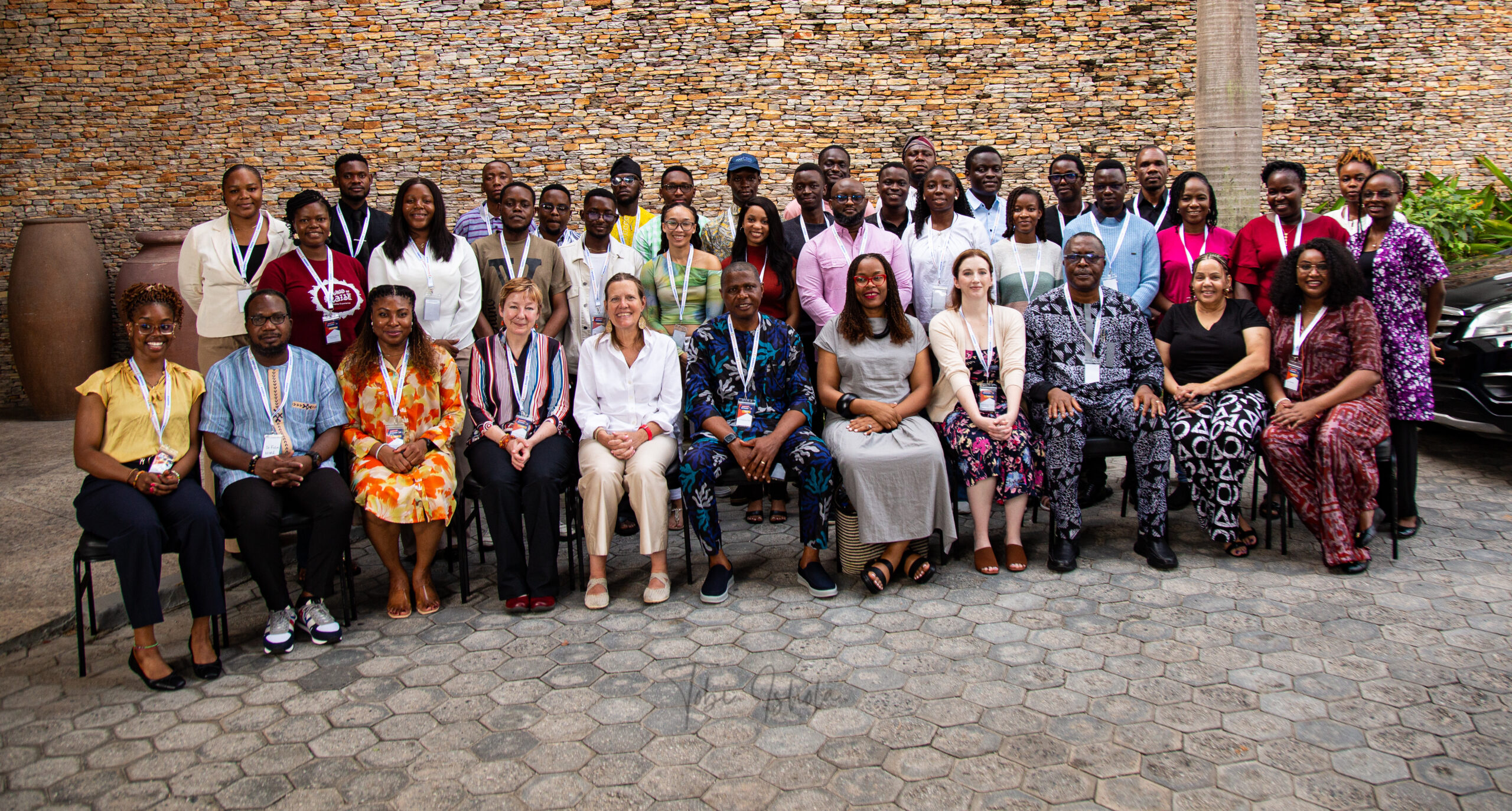
Designathon participants and supporting faculty and staff
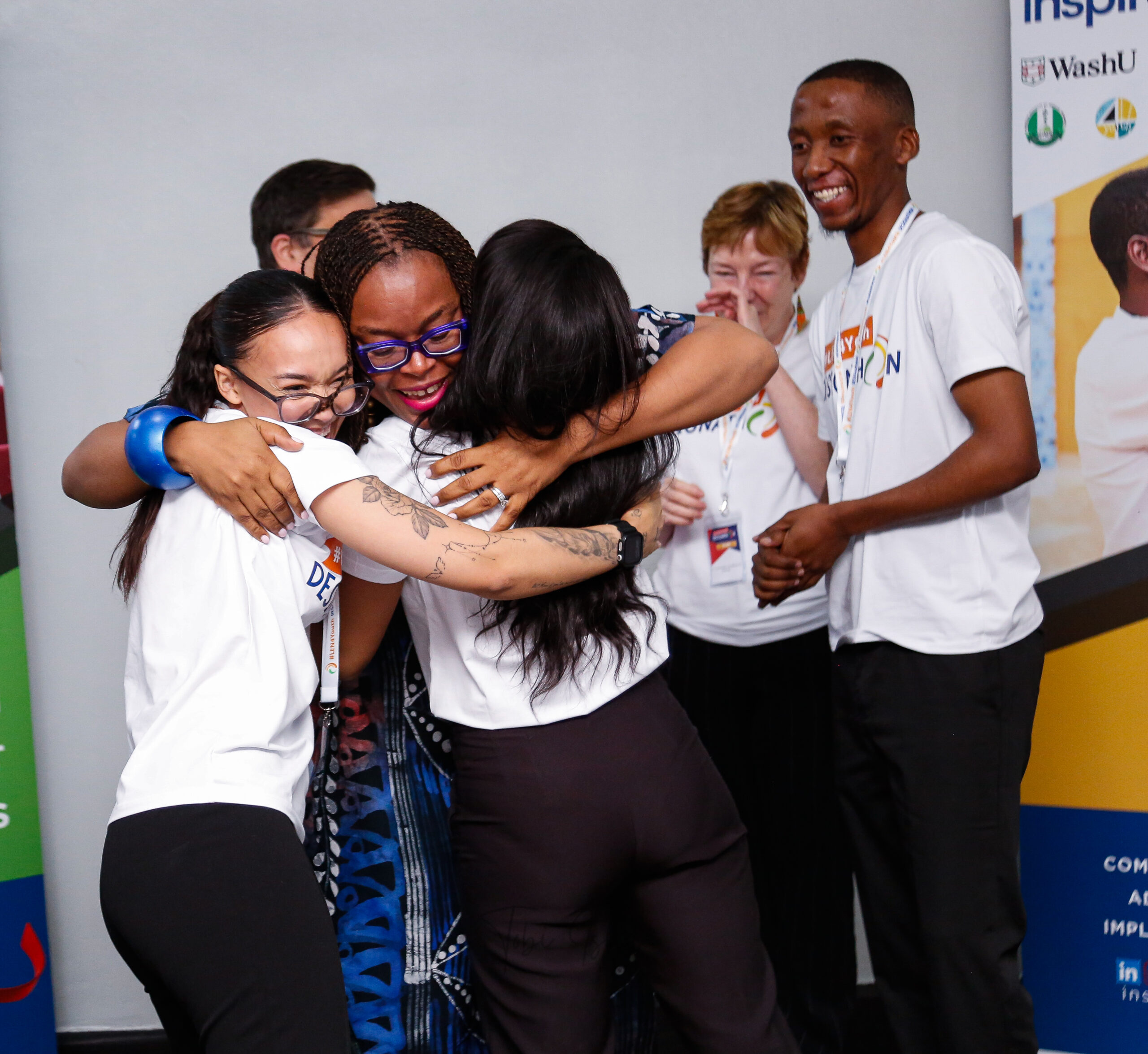
Team Hair Salon embraces INSPIRE Director Juliet Iwelunmor
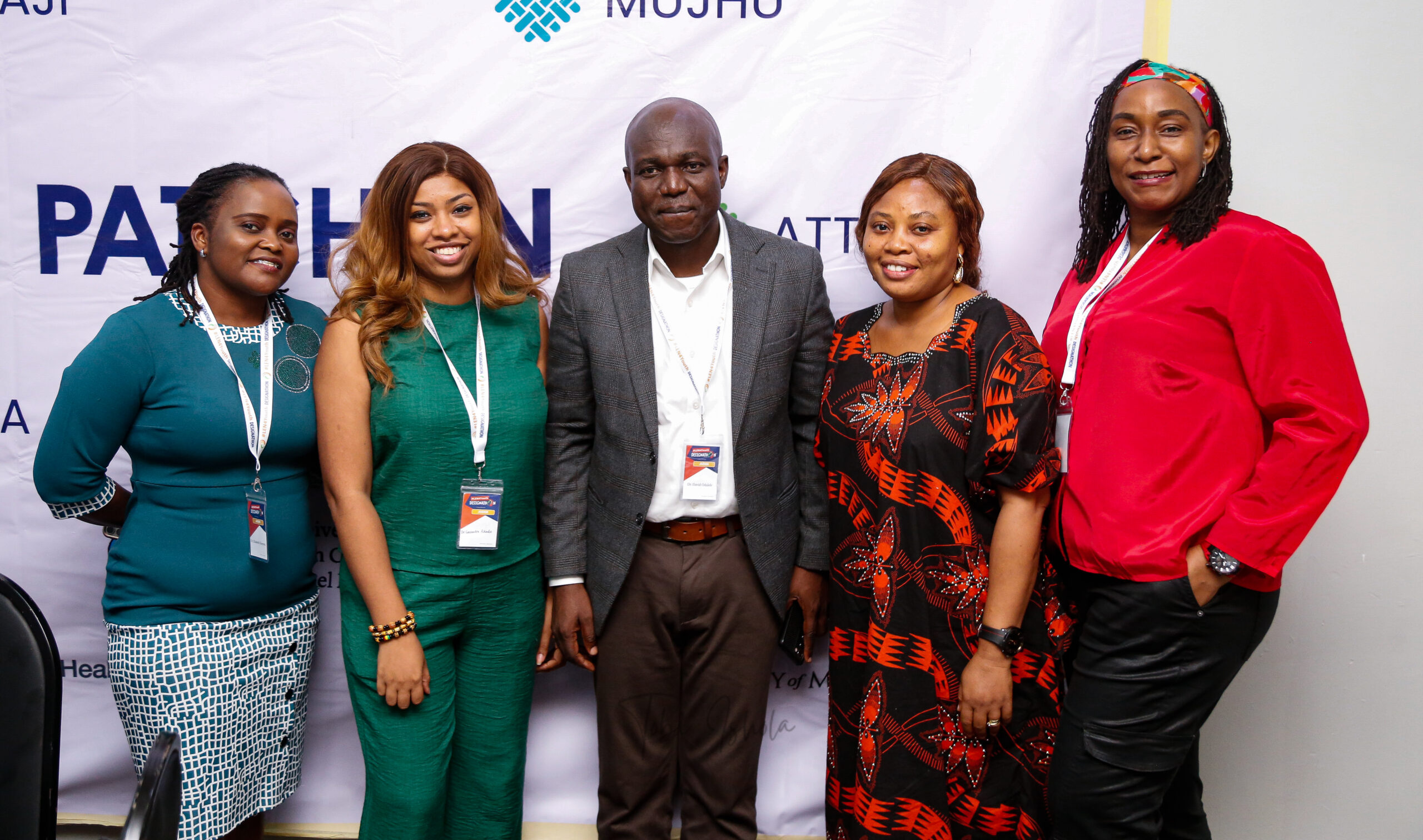
Designathon Sprint judges
Meet the winning teams
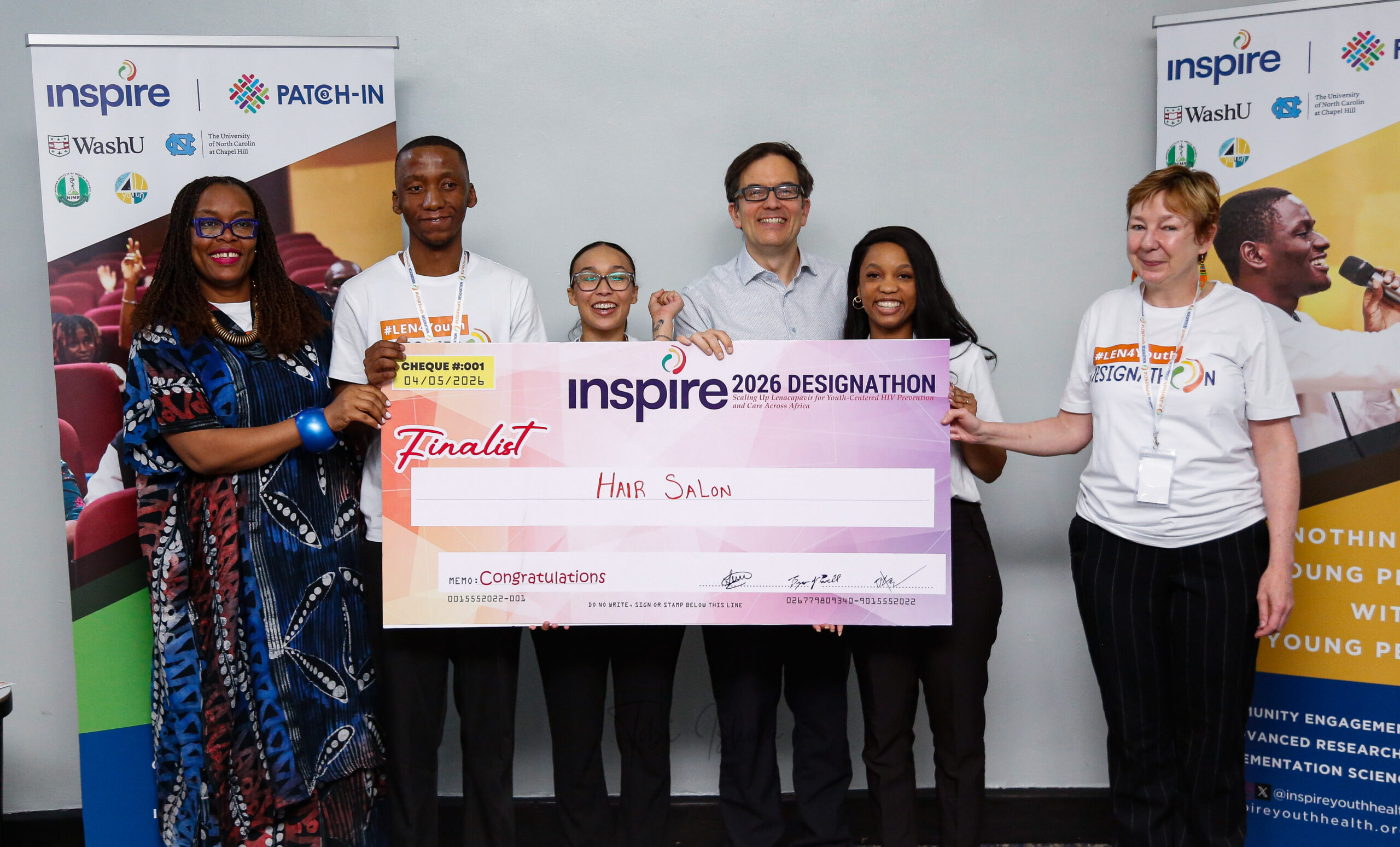
Hair Salon
South Africa | ATTUNE
Team Hair Salon is comprised of Kananelo Lehlohonolo Moshabesha, Mamaswatsi Pearl Kopeka, Charné Petinger and Yolanda Mayman. They seek to address the critical gap in youth-friendly, stigma-free, and trusted access points for HIV prevention information and services by shifting access from clinical spaces to trusted, community-based environments, improving the acceptability, accessibility, and uptake of Lenacapavir among adolescent girls and young women. Their unique approach involves using braiding salons, which are existing community-spaces, as venues for delivering information about LEN without the stigma associated with healthcare facilities, and with the help of trained trusted stylists. Hair Salon is reimagining HIV prevention delivery by shifting the conversation from clinical to personal.
It was a dynamic experience with dynamic people. It facilitated growth… All of us (the teams) were talking and brainstorming amongst each other.
– Charné Petinger, Hair Salon
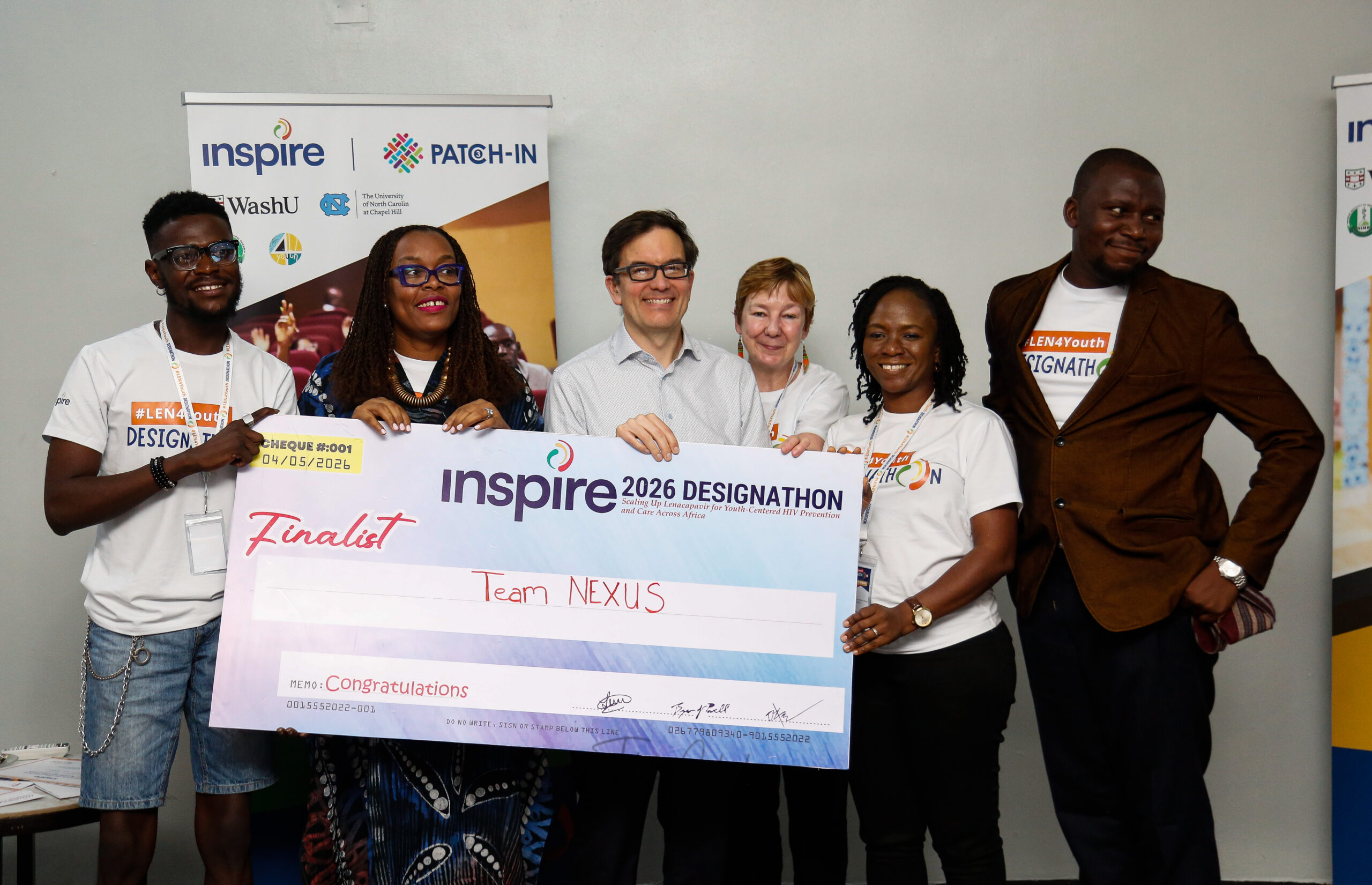
Team NEXUS
Nigeria | iCARE Plus
Team Nexus consists of Sulaimon Afeez Olatunji, Offor Gab-Cliton Nwakobi, Oluwafemi Adeshina, and Hannah O. Smart. Their project — SafePass Lagos — aims to pilot a gamified youth-centered LEN delivery model that can be replicated across Africa. SafePass is designed for young men who engage with sex with men and currently have an HIV-negative status. In a system that does not consider this particularly vulnerable population, which is at a 16-times higher risk for contracting HIV, SafePass has been built with the input of its target community. This community faces daily pill adherence burden, stigma and discrimination, and delayed care — all contributing to low PrEP rentention. The SafePass app aims to overcome logistical barriers — like low bandwidth — and structural barriers — like criminalization — with a privacy-first design that work on slow Internet networks. The app takes specific problems such as patients fearing their name being called in waiting rooms and targets them with concrete solutions such as anonymous check-in with a QR code. Team Nexus has proposed a scalable solution that addresses the unique needs of its community and offers actionable solutions.
As a team, we recognize each person’s strengths and make the best use of them.
– Sulaimon Afeez Olatunji, Team NEXUS
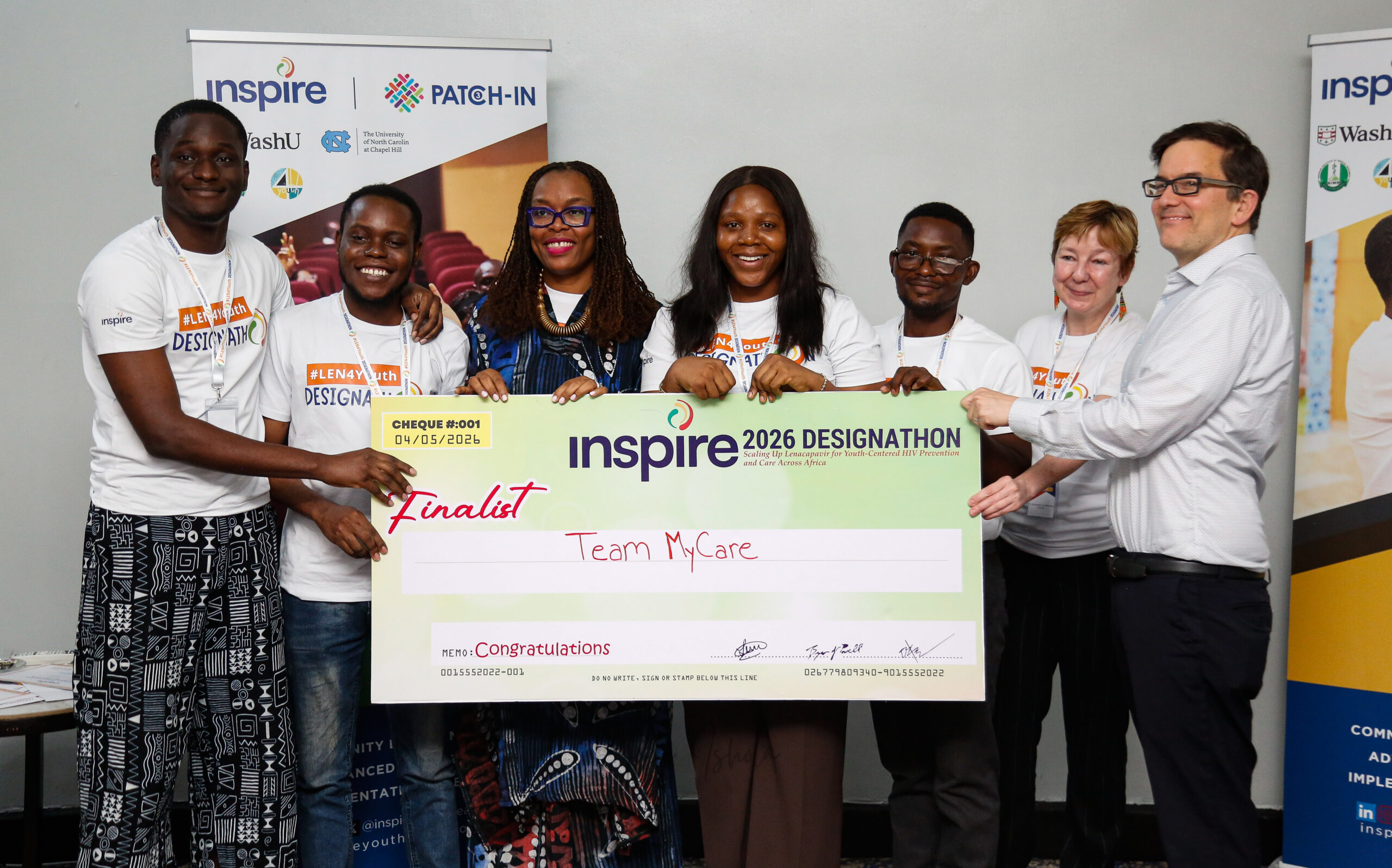
Team MyCare
Nigeria | S-ITEST
Team MyCare —Mobilizing Youth On Campuses For Lenacapavir Access, Uptake, and Referral — is Johnson Davidson Chukwuemeka, Olaoluwaposi Ogunlana, Halimat Olaniyan, and Victor Oluwafemi Femi-Lawal. Their project address the access gap young people in Nigeria face by designing with youth, rather than just for them. They do this by co-creating culturally-relevant materials, promoting on school campuses and other youth-friendly spaces, using a WhatsApp referral system, and deploying 30 trained and trusted peer influencers to drive the conversation. The project works when students scan a QR code on a poster to confidentially message MyCare on WhatsApp. The student is connected with a competent peer navigator who conducts a brief risk assessment and provides stigma-free information. The student is then linked to a trusted facility for a LEN screening and care. Team MyCare redefines how we deliver public health to young people through a scalable blueprint that meets youth where they are.
For me and my team, MyCare, the Designathon was a transformative experience. From learning about co-creation methods to the opportunity to gain insights from implementation science experts, I felt empowered about the ability of young people to be a part of the solution to the HIV epidemic in Africa.
-Victor Oluwafemi Femi-Lawal, Team MyCare